
For years, the month-end close has followed a predictable, if painful, routine.
You open up a spreadsheet. It has anywhere from 7 to 12 tabs. You manually roll it forward, double-checking that no formulas broke in the process. Then, you spend the next few hours logging into separate accounting systems just to check the data health of various client files, jumping back and forth between tabs and tools until your head spins.
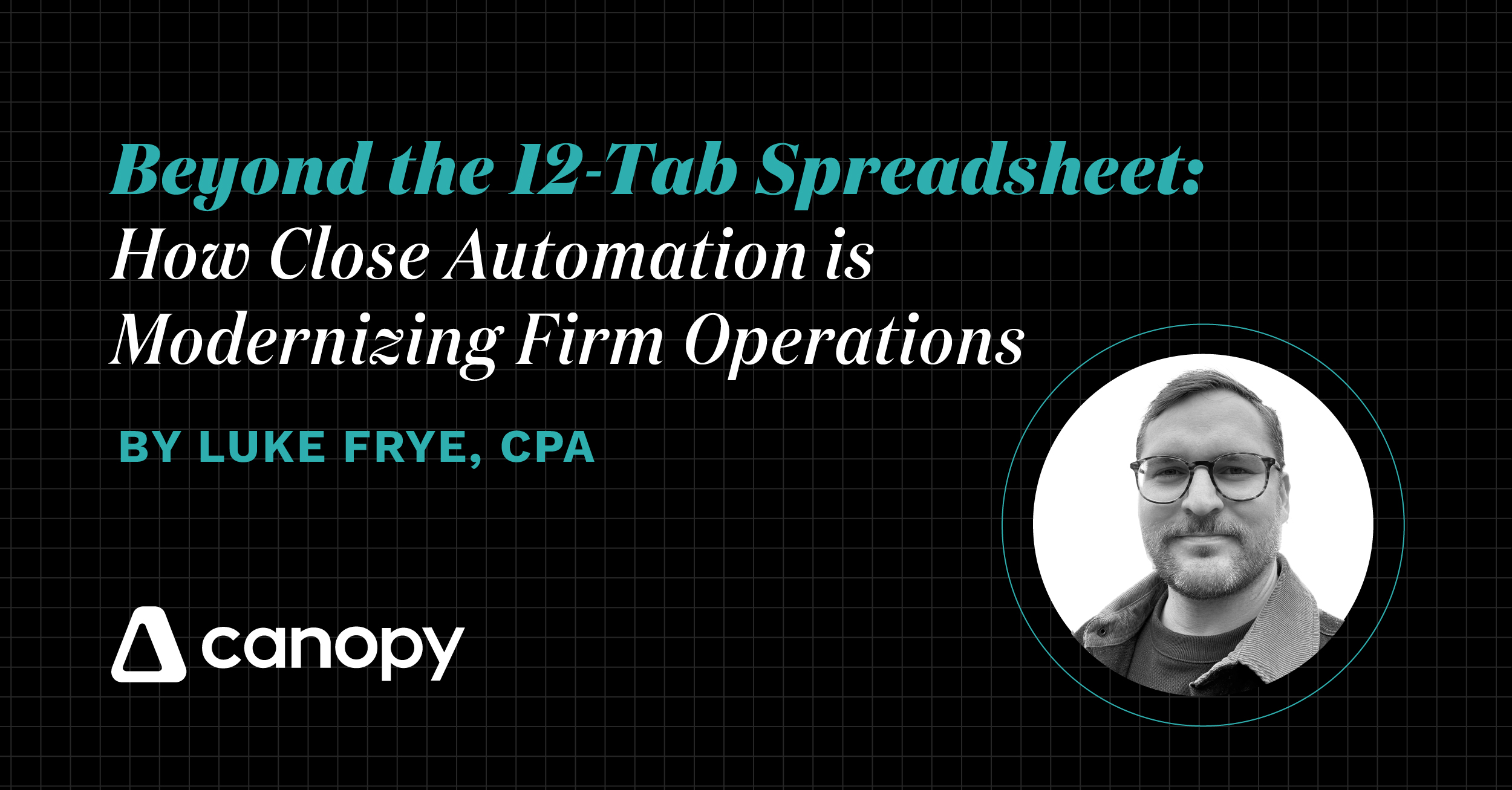
In our latest video, Luke Frye, Accountant in Residence at Canopy, breaks down exactly why modern firms are moving away from this fragmented approach—and how Close Automation is changing the game.
If you’re ready to ditch the spreadsheet chaos and reclaim your team’s time, here is how close automation transforms your day-to-day operations.
1. Ditch the Spreadsheets (and the Risk)
Spreadsheets are wonderful for many things, but they make terrible project management tools for a growing accounting firm. When your month-end close relies on a massive, multi-tab workbook, you are exposed to human error, broken links, and outdated data. Transitioning to an automated framework eliminates the tedious manual roll-forwards and ensures your team is always working from a single source of truth.
2. Real-Time Health Scores at a Glance
One of the biggest time-sinks in bookkeeping is context-switching—logging out of your practice management tool, logging into a client’s ledger, checking the status, and logging back out. Close automation brings real-time accounting health data directly into your practice management platform. You can view the financial status of your client files without ever opening a separate piece of software.
3. A Unified Firm Operating System
Your bookkeeping workflows and your tax tasks shouldn’t live in separate universes. When you centralize your administrative tracking, production checklists, and client communications into a single, secure environment, you build a true operating system for your firm. This level of synchronization dramatically improves internal transparency and stops projects from slipping through the cracks.
4. Reclaim Your Advisory Time
Every minute your team spends wrestling with a spreadsheet or navigating between software interfaces is a minute they aren’t talking to clients. By drastically reducing administrative overhead, close automation frees up your staff to focus on what matters most: delivering high-margin advisory services and strengthening client relationships.
Frequently Asked Questions
About Close Automation
It replaces manual tracking with an automated checklist framework that syncs your production data directly with your core project tracking. This completely eliminates the need to update spreadsheets manually and stops the constant back-and-forth toggling between different applications.