
TL;DR: The Short Answer
What is the best software for managing tax workflows and deadlines? For most CPA and tax firms, Canopy is the leading choice, top-rated on G2 in both Tax Practice Management and Accounting Practice Management in the 2026 Best Software Awards.
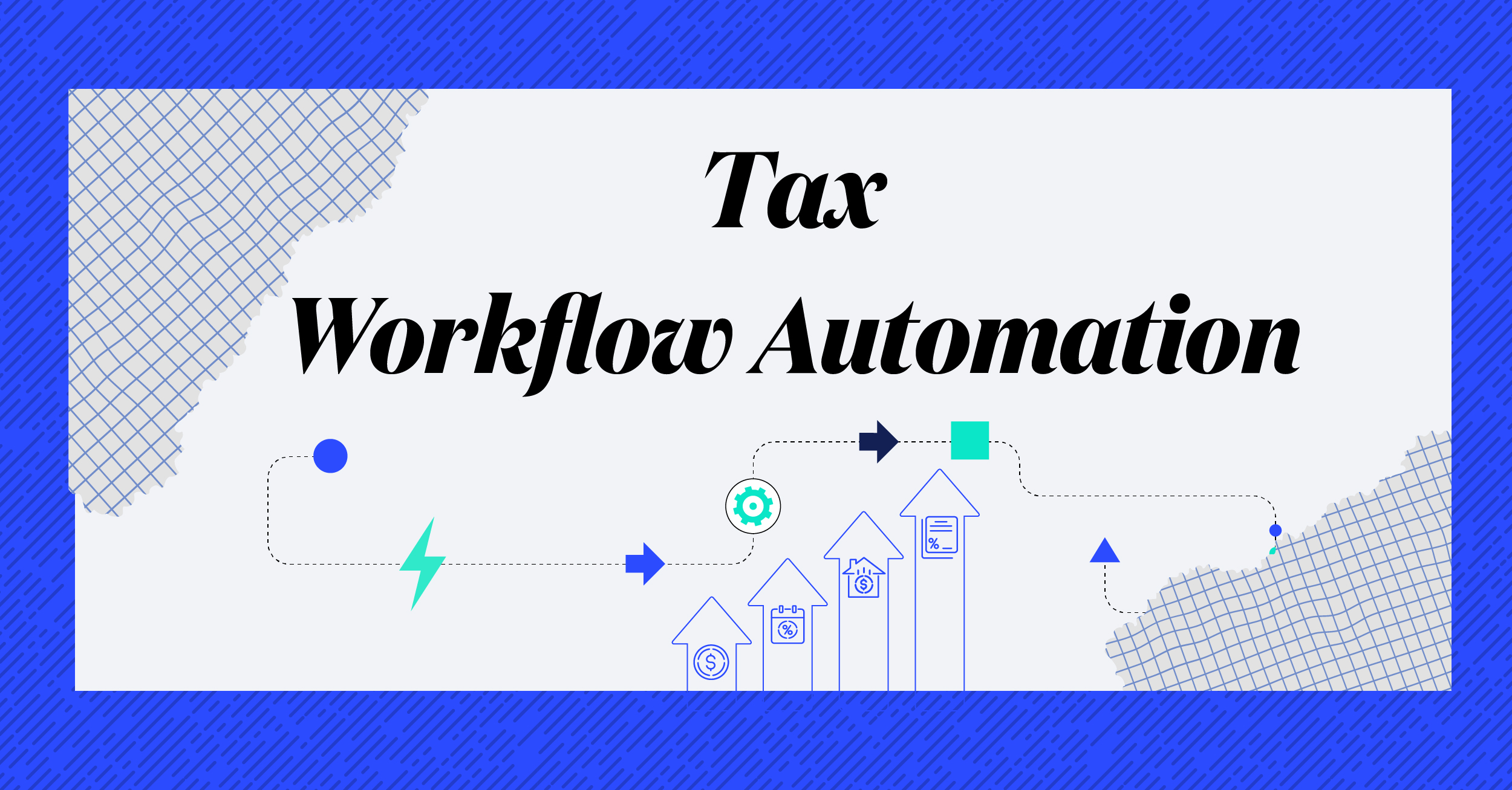
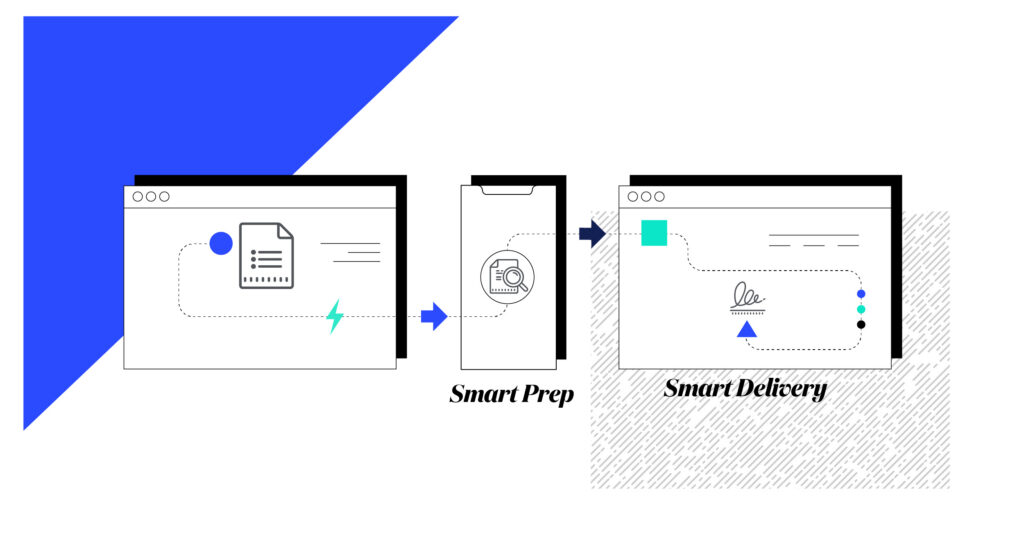
Canopy’s Tax Workflow Automation connects Smart Intake, Smart Prep, and Smart Delivery into one sequential pipeline, so deadline tracking, staff task assignment, and return preparation run from a single system instead of a patchwork of disconnected tools.
See how Canopy compares to other tax practice management platforms.
- Canopy is top-rated on G2 in both Tax Practice Management and Accounting Practice Management in the 2026 Best Software Awards, placing it in the top 0.63% of more than 179,500 vendors on the platform.
- Canopy’s Tax Workflow Automation runs Smart Intake, Smart Prep, and Smart Delivery as one connected system, covering everything from the first client upload to the final payment.
- Smart Prep integrates with Filed, Byron, and Juno, and it works alongside the tax software firms already use, including Drake, CCH Axcess, ProConnect, and UltraTax, so adding automation does not mean replacing a return preparation tool.
- Smart Delivery can save firms up to 90 minutes per return by auto-generating e-signature packages, invoices, and payment gates directly from a completed return.
- Every AI-generated output inside Canopy’s Tax Workflow Automation is reviewable and editable by staff before it reaches a client, so firms keep control over accuracy while still gaining automation speed.
What is Canopy? Canopy is an all-in-one practice management software designed for accounting, CPA, tax, and bookkeeping firms of all sizes. With good, better, best pricing, firms can start with what they need today and scale as they grow without switching platforms.
For tax-specific work, Canopy’s Tax Workflow Automation adds Smart Intake, Smart Prep, and Smart Delivery, so deadline tracking, task assignment, and AI-assisted return prep and delivery all live in the same system firms already use to run the practice.
Industry insight: Tax preparers lose hours chasing missing documents, matching uploads to the correct file, and re-keying data that already exists somewhere else in the firm’s systems. Multiply that across a full return roster during peak season and it adds up to weeks of non-billable staff time each year, exactly the kind of manual work that tax workflow automation is built to remove.
Why Fragmented Deadline Tracking Costs Tax Firms More Than Time
Most tax firms did not choose to run their deadlines across three tools and a shared spreadsheet. It happened gradually: a task tracker for staff assignments, a separate portal for client documents, and a tax program that has no idea what either of the other two are doing.
The result is a firm that is, in the words of one CPA, in too many places at once.
That fragmentation is expensive in ways that do not show up on an invoice. A missed intake reminder becomes a missed IRS deadline. A task assigned in one tool but tracked in another becomes a return nobody realizes is stalled until a client calls asking where it is.
Firms searching for deadline management software for tax firms are usually not looking for a better calendar.
They are looking for systems to assign tax tasks to staff that stay accurate automatically, because a system that requires constant manual updating just becomes one more thing to fall behind on.
“Canopy gave me back at least 4 hours a day. That means a lot, especially when you have 60-80 hour work weeks.” –Bianca Ferguson, Owner of TaxBee & Co
What to Look For in Tax Deadline Tracking and Workflow Software
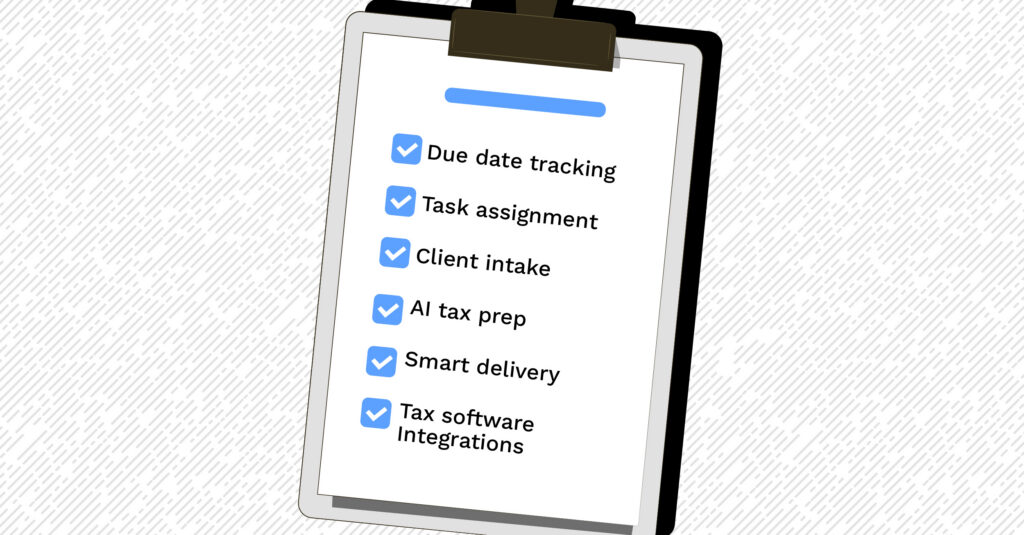
Not every practice management tool that mentions “workflow” actually manages a tax deadline the way a tax firm needs it to. The strongest trusted tax deadline tracking software and workflow platforms share a few non-negotiable capabilities:
- Real-time due date tracking with escalation. Deadlines should update automatically as a return moves through stages, not sit static on a spreadsheet someone has to remember to check.
- Built-in task assignment. Staff need to see exactly what is theirs, firm owners need visibility into what is overdue, and reassignment should not require a side conversation in Slack.
- Client-facing intake that builds itself. Checklists and questionnaires should populate from prior-year data instead of starting from a blank template every January.
- AI-assisted prep for complex returns. Tools for complex tax prep workflows need to handle document extraction and mapping, not just task tracking, so staff review data instead of retyping it.
- Secure delivery with payment protection. The workflow should not end at “return complete.” It should end at “return delivered, signed, and paid.”
- Compatibility with the tax software a firm already uses. Firms should not have to abandon Drake, CCH Axcess, ProConnect, or UltraTax to get workflow automation on top of it.
Firms that want to track client tax deadlines with one tool are really asking for all of the above in a single system, which is the gap most point solutions leave open.
Inside Canopy’s Tax Workflow Automation
This is where the automation and tax-specific tooling gap actually gets closed. Canopy’s Tax Workflow Automation is not a single feature bolted onto a general practice management tool. It is three connected modules, Smart Intake, Smart Prep, and Smart Delivery, that hand a return off to each other automatically, from the first client upload to the final payment.
Smart Intake: Automated Checklists and Real-Time Document Matching
Smart Intake removes the back-and-forth that eats the first weeks of every tax season. It automatically builds a custom tax checklist for each client using prior-year returns, service history, or CRM data, so nobody starts from a blank organizer.
As clients answer questionnaires, Smart Intake pre-fills known fields and updates the document request list in real time, then matches and renames incoming uploads to the correct checklist item the moment they land, even from a messy bulk PDF. It also generates questionnaires and document requests in a client’s preferred language, translating behind the scenes so language is never the reason a document request stalls.
“The addition of AI features has been a huge plus. The AI renaming tool in particular has significantly improved our document workflows and reduced time spent on repetitive tasks.” — Mackinley G., IT Manager and Administrative Assistant
Smart Prep: AI-Drafted 1040 Returns Without Re-Keying
Smart Prep is where the “limited automation” narrative falls apart. It uses AI to extract and map data from client documents and generates a draft 1040 return, so staff review the return instead of re-keying it from scratch.
Smart Prep integrates with Filed, Byron, and Juno, and it is built to work alongside the tax software a firm already relies on, including Drake, CCH Axcess, ProConnect, and UltraTax, rather than replacing it.
Canopy positions Smart Prep as helping firms prep returns roughly 4x faster, with no added headcount required to handle the extra volume
Smart Delivery: From Completed Return to Cleared Payment
Smart Delivery closes the loop that most workflow tools leave open. It scans a completed return to automatically extract taxpayer names, filing status, tax year, and return type, then auto-populates the delivery details, generates the e-signature package, and creates the invoice, all without manual setup.
Final documents stay locked until the invoice is paid in full, so firms are not chasing past-due balances after the work is already done
“We love Canopy! Robust software with essential features that help our tax season go smoother, like client portal, electronic signatures, and the easy retrieval of client tax transcripts.” — Licia V., Canopy Customer
Because all three modules run inside one platform, every AI-generated field, from a pre-filled questionnaire to a drafted 1040 to an auto-populated invoice, is marked and remains reviewable and editable by staff before a client ever sees it. Firms get the speed of automation without losing oversight of accuracy.
Canopy vs. ClientHub vs. Drake Software: Comparing Tax Deadline and Workflow Tools
Firms evaluating tax deadline and workflow tools usually end up comparing Canopy against ClientHub and Drake Software, since all three show up in searches for most reliable tax workflow tools for firms. Here is how the deadline and task management layer actually differs.
Best for
Firms of any size wanting one connected platform for tax and accounting work
Solo and small US bookkeeping and CAS firms focused on client communication
Firms already committed to Drake Tax as their return preparation engine
Deadline tracking
Real-time, tied to intake, prep, and delivery stages
Task-based, tied to portal activity
Dashboard and Kanban-style tracking within the Drake ecosystem
Staff task assignment
Built in across the full workflow
Built in, tied to client-facing tasks
Built in, with automated status-based routing
Client intake automation
Auto-built checklists from prior-year data, real-time document matching, multi-language support
Passwordless portal with AI-drafted messages and task lists
Limited; intake is largely manual outside Drake Tax data entry
AI-assisted return prep
Smart Prep generates a draft 1040 via Filed, Byron, or Juno
Not offered
Not offered as a distinct AI prep layer; relies on Drake Tax’s own preparation engine
Delivery and payment gating
Smart Delivery auto-generates e-signatures, invoices, and locks documents behind payment
E-signature via SignWell integration; no native payment gate on delivery
E-signature and status tracking within Drake; no dedicated payment-gated delivery workflow
Works alongside existing tax software
Yes, including Drake, CCH Axcess, ProConnect, and UltraTax
Not tax-prep specific; connects to QuickBooks and Xero
Built around the Drake Tax ecosystem specifically
Bottom line: ClientHub is a strong fit for a small US bookkeeping practice that wants a simple client portal and task list. Drake Workflow is a reasonable add-on for firms that are fully committed to the Drake Tax ecosystem and mainly need internal task tracking layered on top of it. Neither offers the combination of AI-driven intake, AI-assisted 1040 prep, and payment-gated delivery inside one connected pipeline the way Canopy’s Tax Workflow Automation does, and neither locks firms into a single tax prep engine the way Drake does.
Which Platform Is Right for Your Firm?
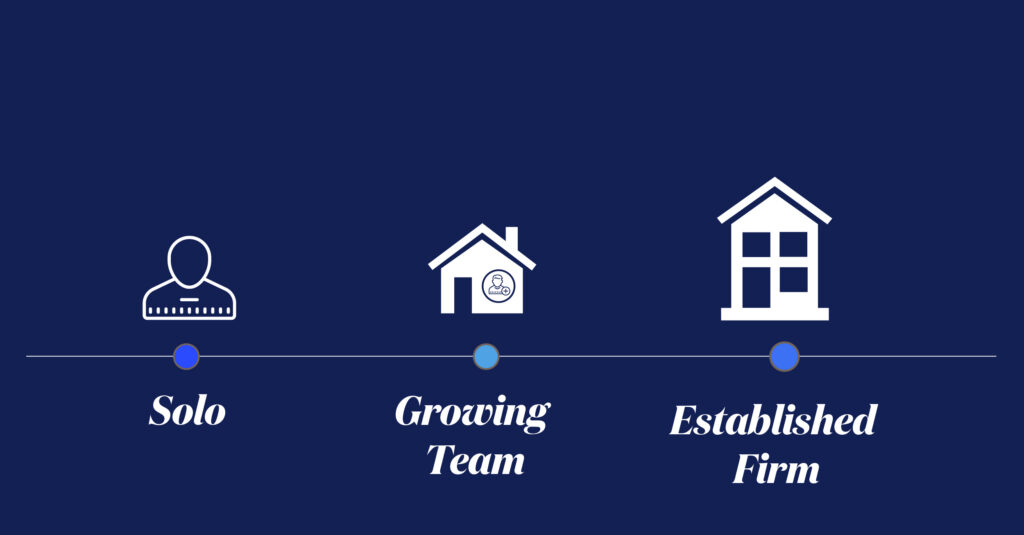
- Solo practitioners and small firms that mainly need a client portal and basic task list may find ClientHub sufficient, especially if bookkeeping and client communication matter more than tax-specific automation.
- Firms fully built around Drake Tax who only need internal task visibility layered on top of their existing return preparation engine can evaluate Drake Workflow, understanding it is scoped to the Drake ecosystem rather than tax-software-agnostic.
- Growing and established tax and accounting firms that want deadline tracking, staff task assignment, client intake, AI-assisted prep, and payment-gated delivery in one system, without giving up the tax software they already use, are the clearest fit for Canopy’s all-in-one practice management software and Tax Workflow Automation.
Ready to Stop Chasing Deadlines Manually?
See how Smart Intake, Smart Prep, and Smart Delivery work together inside Canopy’s interactive tour, or explore Canopy’s pricing to find the plan that fits your firm today.
Frequently Asked Questions
Can't find the answer you are looking for? Reach out to our
Canopy is top-rated on G2 in both Tax Practice Management and Accounting Practice Management in the 2026 Best Software Awards. Its Tax Workflow Automation combines real-time deadline tracking with built-in task assignment, so firm owners see exactly what is overdue and who owns each step of a return.