How Monthly Billing and Simple Advisory Built a Four-Day-Week Firm




Luke Frye, CPA (00:06) Welcome to the Canopy Practice Success podcast. I’m your host, Luke Frye, CPA and accountant in residence here at Canopy, and I’m excited to welcome our guest, Al-Nesha Jones.
Al-Nesha, please tell us a little bit about yourself.
Al-Nesha Jones (00:20) Thank you so much for having me. Canopy, thank you for having me.
I’m Al-Nesha. I’m a CPA and firm owner. I started ACE Group just about 10 years ago. We just celebrated our 10-year anniversary.
Luke Frye, CPA (00:32) Amazing.
Al-Nesha Jones (00:33) We’re based in New Jersey, and we’re a full-service accounting firm: accounting, tax, and advisory.
We believe strongly in year-round relationships with our clients. We believe accountants should work with clients the way humans work with humans. I find that to be a lot less intimidating. So we speak to our clients in very layman’s terms and help them understand things.
By speaking to them throughout the year, we’re able to spread out the advisory portion of our job, which I think sometimes gets misunderstood. It’s really just the proactive planning part. We spread that throughout the year to make sure tax preparation season is solely tax preparation.
It’s also helped smooth out our revenue and better support our clients. It helps them avoid surprises, and it helps us avoid surprises, because I hate surprises, even in real life. Never throw me a surprise party. I’ll freak out. So it’s worked out for all parties involved.
We also work a four-day work week. We’re year-round, Monday through Thursday.
Luke Frye, CPA (01:29) I love that.
Al-Nesha Jones (01:30) And it’s a fully remote team. I love working from an office. My office is actually two minutes from my home, and I love the separation of work and home. But my team likes to be at home, so that’s where they work from.
We see each other on Zoom in team huddles every day. Other than that, we only see each other at planned dinners and things like that, but it works for us.
Luke Frye, CPA (01:49) Amazing. Well, we’re so excited for you to be here.
I have two main topics I want to talk to you about, and you gave us a great preview. One is culture and team in a values-driven organization. But first, I’d like to drill down on moving from compliance to advisory, and you mentioned year-round.
One angle I’d love to understand more is how you serve clients who are starting from a financial literacy deficit. What does that change about how you structure advisory, and also how you get paid? I’ve certainly worked with people I have care and empathy for, and I want to help them, but I also have to pay my bills too.
Al-Nesha Jones (02:31) And I’m heavy on the care and empathy, which is probably why removing myself from the billing portion has been a huge deal. Because I’d give it all away, especially when I feel like someone needs the service but may or may not be able to afford it.
What I’ve learned is that people do pay for the things they need. I learned that the hard way, by reviewing bank statements and working with people who are in tax problems.
But to answer the question, first, the billing. I think billing is how you get over the hurdle of getting information from clients year-round. We spread our billing out over the course of the year, so you just pay monthly. Some clients prefer to pay upfront, and some prefer to pay quarterly, but we try to spread it over as many payments as possible.
One, it makes it affordable. And two, when people are already paying for it, they feel the need to use the service. They’re more willing to speak with you because it’s already paid for. They don’t have to say, “I’m calling my accountant, let me find another $400 or $500.”
When they do pay it that way, they’re running down 62 questions from ChatGPT because they need to feel like they got their money’s worth. Versus, “This is just part of my monthly expenses, and my accountant is available if I have a question.” Now they don’t have to come up with weird, random questions just to feel like they’re getting their money’s worth.
So that’s how we’ve made it affordable to the client, and it also smooths out our revenue. We’re not waiting until Q1 to get hoards of cash and then trying to make it last all year. We’re getting paid all year round.
Al-Nesha Jones (04:01) Two, when we switched from compliance to advisory, it was first to save ourselves.
Here’s the thing. 2020 was a doozy. We were all there. You saw how bad it was. But 2021 was worse if you were an accountant.
In 2020, I have three children, and all three were home doing remote learning. I was trying to balance that with work and with a team. My parents were very sick. That was draining.
What almost broke me was 2021, doing those 2020 tax returns. Because those sweet people I had met had become day traders. They were working remote. They bought houses in Texas and North Carolina. Those weren’t the people we initially worked with. These were different people, and we didn’t know any of this until that tax season.
So here we are navigating tax returns for people in different states. We don’t do tax returns in all 50 states. So for us it was, “Oh my gosh, we don’t want to leave them stranded. Now we have to start reading up on state taxes we’ve never even encountered.”
We didn’t expect the workload of getting 100-page 1099-Bs from people who had never even purchased a stock in their life. It was a totally different ball game.
That’s what told us we needed to do a better job of being proactive. We needed to work with these people year-round. We needed to get their life updates while life was happening, and we needed the opportunity to educate them.
People can only provide you with what they know. If they don’t know how something impacts them because they’ve never encountered it, they’re not prepared to give you the information you need.
Being more proactive gave us the chance to ask, “What are you all doing? How can we give you the information you need in advance? How can we educate you on how the sale of your primary residence will impact your taxes versus the sale of your rental property? How can we help you understand the impact of an actual home office deduction versus the standard one?”
By getting in front of what these people were doing, we figured out how best to give information to them, and how best to get information from them so tax season isn’t so overwhelming for us.
I know that’s a lot, but that’s a hard question, Luke. It was an overhaul.
Luke Frye, CPA (06:19) No, it’s amazing. There’s so much in there.
I’d love to hear more about how you explain it. Say somebody used a tax return from a big box store, or maybe was doing it themselves, and they come to you expecting to just hand you their stuff, you do their return, and they leave.
You explained a bit about advisory, but what does it look like throughout the year? Is there a specific structure? Do you always have four calls with people? Do you have calls ad hoc? How do you avoid the overwhelm of people calling and texting you? How do you honor your commitment to them without overwhelming yourself and your team?
Al-Nesha Jones (07:08) We no longer do texting to individual team members. That also stopped during COVID, because we were trying to protect our own sanity.
Clients can text, but they’re texting our main phone number. We have a platform for that, and they’re not texting questions. Normally they’re responding to reminders. While it’s a two-way texting system, usually we’re sending out blasts about deadlines or “make sure you schedule a call.” They don’t text us questions, because we let them know we can’t receive texts like that. We can’t document those texts the way we’d need to document their concerns.
So no texting individuals, and certainly no texting me. I don’t even respond to my friends in a timely manner. I’m that friend.
Luke Frye, CPA (07:50) You’re that friend. You leave people on read.
Al-Nesha Jones (07:53) A hundred unread text messages at any given time. They would not do well texting me. So stay out of my text inbox.
As far as emails, we strongly suggest email, because I’m an auditor at heart. I love a good record.
We schedule phone calls. Clients are more than welcome to call the office. We tell them from the very beginning, in that initial consultation call, how best to communicate with us. And we let them know that while you’re welcome to call the office, there’s never the expectation that someone can answer your question right there in that moment.
The best way to connect with us is a scheduled call, because we want time where we can speak just to you and focus just on your matter without multitasking. You don’t want that energy from us, and you don’t pay us for that kind of interaction.
As far as cadence, we operate around the estimated tax payment deadlines. We do quarterly calls with businesses, but if you don’t have a business, we operate around the estimated tax deadlines. That creates a different cadence for us, and it also gives us a break during the summertime.
Luke Frye, CPA (09:03) Mm-hmm.
Al-Nesha Jones (09:04) Because there are no estimated tax payments due in the summer. It’s June, and then not again until September. So we get a little breather in the summer, which is really nice.
We use Calendly, and in Calendly we can block the schedule. We send that link to our clients, scheduled to go out 30 days before the estimated tax payment deadline. Get on the calendar. You can’t get on the calendar within five days of the deadline, because we might need time to revisit estimates, and we can’t do that if we’re doing a bunch of calls.
So we’ve backtracked into: When do we need to talk to the client? How much time do we need to do the calls, do the prep, and get the numbers back to clients without stressing ourselves?
When you lay the plan out for clients, it’s easy for them to follow. They just need to know your system, and we teach it to them.
Luke Frye, CPA (09:52) Right. And they need that handholding. They think taxes are due April 15th. No, that was last year’s taxes. This year’s first quarter is also due in April. Then that June deadline comes pretty quick, but then we get that extra month in July. That’s great.
So it sounds like you came up with a process you were repeating, and then you systematized it. A lot of this is automated through different tools.
Al-Nesha Jones (10:23) Yes. And it took us almost three years to do that. I don’t want to make it seem like this was an overnight win. It easily took three years before we felt comfortable and confident in it, and we’re always tweaking it. Always.
We keep an ideas and improvements log for when something doesn’t work well. If we can fix it now, great. If we can’t, we keep it on the list until we can come back and resolve it.
We’ve already tweaked our organizer based on how we saw people answer questions this year. While it’s fresh in our minds, we go back and update it right then. So it’s a constantly changing process.
We’re about to introduce a do’s and don’ts list for clients on how they provide information to us. If your scanner is blurry, here’s a link. They’re $79. You’re going to have to go get a new scanner.
Luke Frye, CPA (11:06) Oh my, I love that. That’s amazing. Are you pretty active on social?
Al-Nesha Jones (11:16) I’m terrible on social. What you should know, Luke: I said I had a hundred unread text messages. If I can’t keep up with that, there’s no way I can keep up with social media notifications. I’m awful on social media.
Luke Frye, CPA (11:26) Amazing. Smart. You’ve probably saved yourself hours and years of your life by not doing that.
Al-Nesha Jones (11:33) Okay, thank you, I appreciate that. I wish I could do better, but I can’t. I try.
Luke Frye, CPA (11:37) I think you’re doing great.
Before we switch totally over to culture, I talk to firm owners every day. It’s my favorite thing, because I love accounting, sales, marketing, and product, and I love helping people build things.
Especially now, with AI coming down the barrel, there are some glimmers of possibility in it doing some of the entry-level work, which we may call compliance. Everyone wants to switch to advisory, and it’s been a buzzword for as long as I’ve been in this profession, about 15 years.
What’s the most common mistake you see firms make when they try to add advisory?
Al-Nesha Jones (12:24) I think firm owners overcomplicate it.
Don’t tell anybody this, but I talk to a lot of firm owners who are really, really smart people, and I’m like, “Wow, y’all are really great CPAs.” I’m a very average CPA. But I think firm owners overcomplicate it, and they feel like they need to make advisory this really big offering.
I try to bring it back to: What is your client actually seeking?
Your client is still afraid the IRS is going to arrest them if their tax return is late. I don’t know why. I don’t know if they’ve seen IRS officers come and drag their neighbors out in their undergarments and haul them off to prison. I don’t know what movies they watch, but they still live with that fear. They don’t want to get things wrong, and they don’t want to make big mistakes.
So I think advisory, at its core, is proactive support. It’s answering the questions your clients have in a timely fashion.
For the majority of us, if you work year-round, you’re doing advisory. Here’s how I know: if you’re not doing bookkeeping and people are still calling and emailing you after the tax return is done, why else would they be calling or emailing you, other than for advisory?
Instead of trying to make it this big thing where you save people five figures in taxes every year, because the reality is you probably can’t do that for all your clients every single year, I think it needs to be reframed into something much simpler. Proactive support. Individualized advice, so they don’t have to rely on what they see on social media and can get advice that actually applies to them.
So many people benefit. We do W-4 recommendations for every single client. Nobody pays for W-4 recommendations. Think of it like getting your hair done. My hair is going to look like crap if you don’t trim it first. You might as well just include the trim. That’s how we do it.
Luke Frye, CPA (14:18) And then you don’t get blamed. If it’s your first year working with a client, and last year they got a refund, then they get a new job and all of a sudden they owe money, they blame you.
Al-Nesha Jones (14:30) Yeah. They don’t comprehend that the tax return is just a reconciliation of what they did all year. That’s not how they understand it, and they’re not supposed to. It’s our job to teach them that.
We tell every single client, “If under-withholding was your issue, it’d be our pleasure to help you fix it.” It takes us 10 to 15 minutes.
Luke Frye, CPA (14:49) Wow, I’ve never heard that. I love that, and it’s the simplest thing.
Al-Nesha Jones (14:53) It really is, but it’s so valuable to them. That W-4 form trips everybody up.
So we just say, “Hey, we’ll get on a Zoom call.” If your payroll processor has a platform where you can make the changes online, we’re happy to get on a Zoom call. It takes 10 minutes: click here, click there. If you fill out paper forms, we’ll do a Loom recording and walk you through how to fill out that form. Then send us your next two pay stubs so we can see what the withholdings look like, and we can adjust. They see so much value in that.
Luke Frye, CPA (15:22) Wow. And for those highly technical CPAs you were just talking about, the people with deep tax knowledge, or the audit, finance, and CFO types, I think we forget that it’s actually some of the most simple, baseline stuff that people need help with.
Al-Nesha Jones (15:40) That’s it. They just want to understand, “What would happen if I put this much more in a retirement account?”
We think of it as being so small, but it’s really foreign to them. It’s no different than me and an oil change. I don’t know how to do an oil change. It’s probably simple, but it’s not simple to me. So I find so much value in somebody who knows what they’re doing and can change the oil. Your client sees the same value.
If you take out the need to create a really overly complex model and just get to a base, “Hey, you’ll get four calls,” or two calls, or “I’ll help you with estimated tax payments,” or “I’m going to help you eliminate interest and penalties because you’re not paying your taxes on time,” there’s so much value there. You already do it. Now you just get paid for it.
Luke Frye, CPA (16:30) So you mentioned pricing, and that you’ve removed yourself from it. That’s my next question. How do you come up with a price? I assume you don’t do hourly, but you figure out a way to make a fair price for you and the client, and you’re not the one doing billing. Tell me more.
Al-Nesha Jones (16:47) We moved to package pricing about five years ago. We always got paid in advance. I was never going to be the kind of person who had to beg for the money afterward. For a number of reasons, that wasn’t going to work.
I think getting paid in advance also communicates to the client that our fee isn’t based on the results of your tax return.
Luke Frye, CPA (17:14) Oh, that’s really good.
Al-Nesha Jones (17:14) Right. We don’t get paid less if you have a liability or a balance due, and we don’t get paid more if you get a larger refund. The two numbers are totally separate. So that was part one.
The second part, and why we moved to packages: we used to do a deposit. Everybody paid $500 or whatever upfront, and then based on the complexity of your return, we’d bill later.
While that eliminated surprises for us a little bit, it didn’t eliminate surprises for the client. They still felt like, “Geez, I did earn a little interest on my bank account. Is that going to make my tax return bill higher?” They never knew what that last bill was going to look like, so they weren’t prepared to pay it in advance. And we’re not filing a tax return if we haven’t been paid.
With packages, I find it all works out at the end, and we still reserve the right to adjust. I believe strongly in engagement letters. I’m an auditor at heart. That’s where I started my career. In our engagement letter, we always say we reserve the right to adjust the fee, and that fees could go up or down. It’s not likely they’re going down, but it happens every now and then.
Our fee is based on the initial consultation call, and on a prior-year tax return if we get the chance to review one.
We publish our starting rates right on our website. The base tier, the compliance tier, is a $1,500 minimum. “But I only have two W-2s.” $1,500 minimum.
Luke Frye, CPA (18:43) Wow. I feel like we need to say that again and again for the people who charge 400 bucks.
Al-Nesha Jones (18:45) Yeah, that’s it. “But I’m such an easy client.” $1,500 minimum. It’s just what it costs to be here, because this isn’t the kind of place where you drop off papers and somebody passes you back a tax return.
We review that organizer at length. For every four organizers that are completed, I’d say one out of four, during either the document review or the tax return review call, we realize somebody missed something. We catch it for the client. “You told us you sold stock, and you didn’t give us any documents that support it.” “Oh yeah, I forgot.” So there’s value in that.
If you walked into a big box store, and this is no disrespect to them, whatever you give them is what’s going on that tax return, because they only have 30 minutes or so to complete it.
This isn’t a 30-minute job. This isn’t pure data entry. This is making sure we complete as thorough a tax return as possible for our client. That takes more than plugging the numbers from the sheet and making sure it reconciles. It doesn’t work like that.
That’s why we can’t bend on that starting price, because every client gets the same experience. Every client goes through a live tax return review call. We don’t send a recorded video, because how do we know if you fast-forwarded through it? Trust but verify around here.
It takes time to schedule a 30-minute call with every single client, answer your questions, and walk you through your return at a high level.
Luke Frye, CPA (20:09) Very good. So even the $1,500-a-year people are paying you monthly?
Al-Nesha Jones (20:17) Those $1,500 people can choose whether they want to pay monthly, quarterly, or annually. The sooner you start, the easier it is.
For a first-year client, they usually have a shorter period to pay, because you have to be paid up by February. If you don’t call us until June or July, you’ve got a smaller window. But if you’re with us, you’re just paying monthly. We’re like any other subscription you have, and you budget us in.
Some people opt to pay annually. “I’m already prepared for it. It’s what I’m used to.” If you want to give us your money right now, we’ll take it.
But our goal is to make this extremely affordable, and a service you get used to and accustomed to. That’s our ultimate goal.
Luke Frye, CPA (21:00) And they think of you every time a payment goes out.
Al-Nesha Jones (21:02) When the money comes out, yep, they do. On the first of the month, we’re top of mind.
Luke Frye, CPA (21:08) Awesome. Let’s talk more specifically about building culture and team in a values-driven firm.
Staffing and retention is something we’ve talked about a lot, but not from the perspective of someone in your position, who’s hired intentionally around a community mission, with an all-female team of moms. What does that do to your hiring, culture, and retention strategy?
Al-Nesha Jones (21:32) First, I just want to say for legal purposes, this wasn’t some sort of reverse discrimination thing. It just worked out that moms showed up.
I think it’s because of the way I show up in spaces, and the fact that I don’t hide that I’m a mom. It’s on our website. It’s in our marketing materials. I speak about it a lot. It’s a big part of who I am.
As a very small firm, I did feel a little insecure about hiring, because I can’t offer some of the benefits larger companies offer. But what I’ve also had to learn is that every employer isn’t for everybody. Not everyone is looking for everything someone else can offer.
The employees who gravitated toward this business were looking to work remotely. They needed more flexibility in their schedules. They appreciated that I thought as much about retirement as they did, or maybe even more. It was important to me that even as a small business owner, I contributed to their retirement, because I think it’s important that even if you’re working part-time, you’re thinking about your future.
Someone who’s not going to make a big deal or fuss if your kid forgets an instrument at school on a Wednesday morning and you’ve got to cut out for 45 minutes. Because at the end of the day, we just have to make sure we’re meeting our clients’ needs in the best way.
That was a game changer: realizing that while I’m not this huge firm that can offer nine weeks of paid vacation, you know what we do have? We’re not going to yell at you if you can’t start at 8 a.m., because I don’t start every day at 8 a.m.
If you need to leave early because you’ve got something going on with the people who bring you joy, that’s perfectly fine. And if you need to log in later tonight, guess who’s not going to fuss with you? Me.
Luke Frye, CPA (23:19) That’s so inspiring. It’s so human.
At my first job out of college, I’d show up at 8:01 and my manager would look at the clock. That’s a world I could never thrive in. So I’ve naturally gravitated toward this human approach. We all have lives. Work is important. We spend tons of time there. We should have values, and shared values with the people we work with, to make it better. But we also have lives outside of work.
Al-Nesha Jones (23:49) And when everything else is off, the work is off. When my children are unwell, or my spouse is unwell, or I’m unwell, the work isn’t going to get done very well. My focus is going to be off. I’m not going to show up best for the clients. I need to be good for what I produce to be good.
There’s not one thing I’d do for myself that I wouldn’t do for my team. If I understand that sometimes I need a breather, I understand that for my team too. I wouldn’t give myself a benefit and then say, “Don’t you dare show up 20 minutes behind schedule.”
I believe strongly in communication. I’m big on communication, personally and professionally. I can’t best support you if I don’t know how to support you. So I do need to know those kinds of things, so I know how to show up for you.
And I do the same thing. When I’m not having the best day, I don’t lie and say, “Today’s a 10 for me too.” No, it’s a bit of a six. But here’s what I’m doing to change it. I think I’m going to move some calls around. Instead of focusing on these tasks, I’m going to focus on those. And I’m going to cut out a little early today so I can hit the ground running tomorrow.
Luke Frye, CPA (25:03) That’s amazing. Do you use that language with your clients as well as your staff, or only when it needs to be reported?
Al-Nesha Jones (25:12) When it needs to be reported. I’ve cried with clients a lot. We did a lot of co-crying during COVID.
Luke Frye, CPA (25:21) Yeah, I hear that.
Al-Nesha Jones (25:23) I’ve absolutely expressed things to clients, especially these last couple of years, when things have felt heavy and overwhelming. There are things happening in the world. I’m empathetic, and I read the news every day.
Clients express those things to me, and we express them to clients, because we’re in pretty deep relationships with them. We’re talking about finances. Clients need to trust us. They need to know whether they can be open, honest, and authentic with us. I think by showing that, you open the door for it.
Luke Frye, CPA (25:53) Leading by example.
Al-Nesha Jones (25:57) Leading by example, and not just with your team, but with your clients.
I have clients whose children go to the same schools as mine. June is a busy month for a parent. So I can say, “It’s been a hectic month. Estimated tax payments are also due. And yeah, I’m a little drained.” And clients are like, “Oh my gosh, me too.” They never say, “How dare my accountant be drained?” They never respond like that. Ever.
Luke Frye, CPA (26:21) Right. It’s okay to be human.
Something else you said that I love, and I’ve heard it from different coaches who’ve worked with me, which I highly encourage: if you’re not feeling a 10, and you’re feeling a five, the goal isn’t to get to a 10 that day. It’s, “What can I do right now that’s going to help get me to a six or a seven?”
Al-Nesha Jones (26:41) Yep. Some days it’s just, “What can I do to stay at a five and not drop to a four?” Some days it’s, “What’s the minimum amount of effort I can give to just stay where I am?” And sometimes that’s got to be enough. For me, at least.
Luke Frye, CPA (26:58) Amazing. Let’s jump back into more tactical hiring, as it relates to interns from Montclair who became full-time employees.
I think there are probably people who want to work for you after this conversation. Are you hiring? And what does your pipeline look like?
Al-Nesha Jones (27:16) We’re always open to reviewing applications. While we have a full staff at the moment, there have been times where I’ve said, “No, we’re totally full,” and then I’ll see something and think, “That actually sounds interesting.”
Something we do that may be unconventional: we don’t tie people to “This is your job description. Don’t deviate from it.” We’ve had CPAs who were fantastic writers, and they said, “I’d love to write a few blog posts.” I love to write. I write music. I write books.
So we don’t limit anyone to just one thing. My right hand loves event planning. Guess who hates event planning? Me. So she says, “I’d love to coordinate the photo shoot. I’d love to plan a team dinner.” Because in addition to whatever you do for me, you also have interests outside of work. So we’re always looking at what’s in the pipeline.
I’m a very proud, two-time Montclair State alum.
Luke Frye, CPA (28:17) Same.
Al-Nesha Jones (28:18) Coming from a state university and going straight to a Big Four accounting firm, a lot of people asked, “How?” But it’s just as good an education as anyone else got. We all started with the same salary.
I got my first job through on-campus recruitment at Montclair State University. That’s why I find it so important to give back and offer internships from the university that helped me launch my career.
To be able to offer paid internships and turn that into employment is beyond a dream come true. It’s probably something I couldn’t have even dreamt up until recently.
And to offer that kind of opportunity to a student who wasn’t even an accounting major, just a business student, to give her an idea of what it looks like to work in a smaller firm, was a huge deal. Straight out of college, being able to say, “Sure, you can start here and get your launch here.” That was a big deal for her, and it was a big deal for me.
It’s something I continue to do. We usually offer internships in the winter, but if we can swing it, we try the summer as well.
Luke Frye, CPA (29:22) It’s so great to share that there are multiple ways to be successful.
I had a state college education too. I couldn’t hack it in real public accounting, but I was told that was the correct way. So for a lot of my career, I felt a bit like a failure, like I wasn’t smart enough or didn’t want to work hard enough.
But in reality, you’re providing a far more human experience for somebody, and you’re also teaching and mentoring them, getting them up to speed on tax law and how to build a modern practice.
Al-Nesha Jones (30:02) I also started my career in public, and look, we’re not all meant to stay. There’s literally not space for all of us at the top. It’s designed to be an up-or-out culture. They need some of us to filter ourselves out.
Luke Frye, CPA (30:17) Exactly.
Al-Nesha Jones (30:17) We did the right thing by choosing what worked for us, because that created space for the people who were locked in to that path.
I made it four years, and I don’t regret a day of it. I made fantastic connections. I learned a lot about how corporations work, and I figured out what didn’t work for me. I believe it’s just as important to figure out what doesn’t work as it is to find out what does.
It didn’t work for us, and that’s okay.
Luke Frye, CPA (30:43) 100%. I love it.
This has been such a great conversation. I have three predictions I’m going to ask you about.
First: In 10 years, will most accounting firms be advisory-first, or will compliance still be the core business? And I’m checking in with you in 10 years to see.
Al-Nesha Jones (30:57) Oh gosh, Luke. Check with me in 10 years. For all I know, I could be driving a robot taxi in 10 years, because things are changing so fast.
I think advisory-first. I don’t think AI has it right now, but I think it’s going to figure it out. I don’t trust it at all with tax returns right now, but lots of people are working on it. So I’m going to say advisory-first.
Luke Frye, CPA (31:22) Second: Will more firms like yours pop up, or will they remain more of an exception?
Al-Nesha Jones (31:29) More firms like mine will pop up. We’re way too far into the land of AI, and we’re just at the tip of the iceberg.
People are going to want human connection. People are going to pay a premium for a human to look at their accounting, or to look at their medical records. People are going to crave that kind of relationship. I think the pendulum is going to swing, honestly, probably before 10 years.
Luke Frye, CPA (31:54) That leads perfectly into my final question. As AI takes over more compliance work, what’s one thing that keeps human CPAs irreplaceable? And you just said it: human relationships.
Al-Nesha Jones (32:05) Yeah. As much as ChatGPT talks to me like it’s my friend, at the end of the day, it’s not.
There’s just something about human-to-human connection. I don’t think we were built to be alone. I don’t think that’s how humans are wired. We spent a lot of time remote, operating in silos, but I don’t think that’s how we’re made.
So AI will find its place, and we’ll find a place for it. I just don’t envision it taking over what humans do naturally, which is connect.
Luke Frye, CPA (32:39) I hear that.
Al-Nesha, it’s been such a wonderful time getting to know you and having this conversation. Any closing comments before we wish everyone a good day?
Al-Nesha Jones (32:51) Other than wishing everyone a good day, I’ll close with this.
As entrepreneurs, we get two choices. We can build what truly works for us, or we can build a very custom prison. But we choose.
Luke Frye, CPA (33:05) Ooh, custom prison. It’s your choice.
Al-Nesha Jones (33:08) Yes. So please, work toward building what works for you. It’s 100% a choice.
It’s probably the biggest benefit of entrepreneurship. Paying for healthcare as an entrepreneur isn’t the exciting part. But the part that says, “I get to choose who I work with. I get to choose how I work.” I don’t have to do it the way it was done at the last place I worked, or at the last firm I saw do it. You can do it exactly the way you want, and you can change it today.
So instead of building something you absolutely despise, take a chance on building something you could fall in love with.
Luke Frye, CPA (33:43) I’m so encouraged by this. Thank you so much, Al-Nesha.
Al-Nesha Jones (33:46) Thank you, Luke. I appreciate it. Thanks.
Hosts & Guests
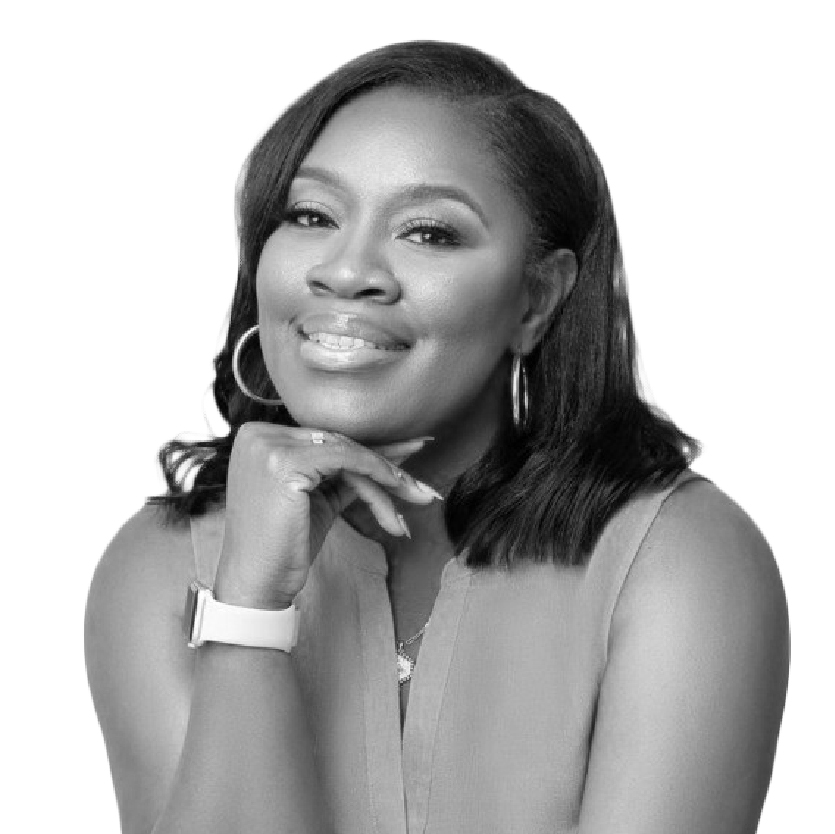
Al-Nesha Jones
Guest
About the Podcast
Share
Authors
By: Chrissy Rutledge
Chrissy is the Social Media & Content Marketing Specialist at Canopy.
Read more by ChrissyDiscover more like this