Why Your Accounting Firm Needs an Operating Model, Not More Delegation




Luke Frye ([00:00]) Welcome to the Canopy Practice Success Podcast, where we interview leaders in the accounting profession to share industry insights, uncover new strategies, and inspire action to build a successful accounting practice. I’m your host, Luke Frye, CPA and accountant in residence here at Canopy.
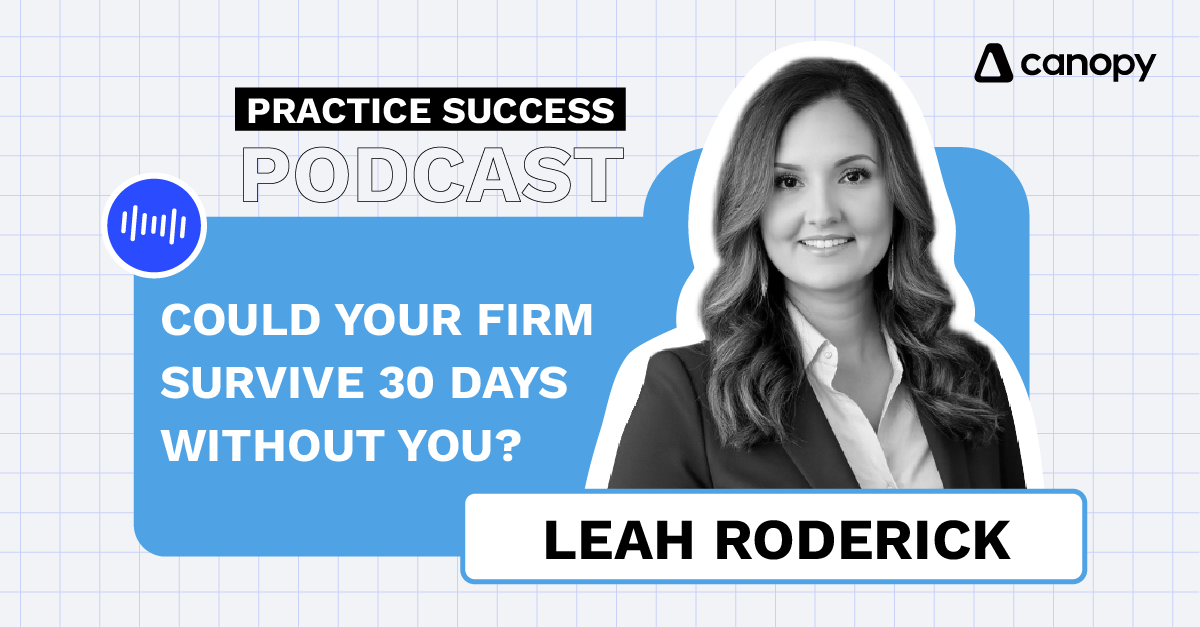
Today I’m welcoming my new friend from LinkedIn, now in real virtual life, Leah Roderick. Leah, welcome to the show.
Leah Roderick ([00:00]) Hi. Thanks so much for having me, Luke.
Luke Frye ([00:00]) Why don’t you tell us a little bit about you, your company, what you’re up to, and maybe a little bit of your background?
Leah Roderick ([00:00]) I’ll start with my background. I spent the better part of the last four years working for a consulting firm that serves the public accounting sector. We did a lot of business brokerage for accounting firms, a lot of recruiting for accounting firms, and then some consulting around operations, growth, and a suite of different things.
I spent the first two and a half years of my tenure working directly with clients, so working with firm owners and their leadership teams, before transitioning to running the back end of that consulting firm. I was running ops. I was still very involved in client operations, but I’d moved away from working with clients directly.
Then I had the opportunity, for about a year during that time, to work for a brand-new accounting firm roll-up, which was in stealth mode and still is in stealth mode. We successfully completed two acquisitions. That was a really wild ride, but I got to know a lot about the accounting profession.
I’m not an accountant, so I don’t claim to know how to do all of the accountant work. I have an understanding, though. I bring an outsider’s perspective to operations and how to run accounting firms like a business, which is where I think a lot of firms tend to struggle: thinking like business owners as opposed to accountants.
For the last five months, I’ve been running my own practice. I decided to go out on my own and start my own consulting firm. It’s called Fast Enough Consulting, and everything I do in my practice is around accounting firm operations.
I serve as a fractional COO. I serve as a fractional integrator. For those of you who are familiar with the Entrepreneurial Operating System, you’ll know the integrator term. I also do consulting and project-based work. If a firm doesn’t need somebody dedicated and embedded in their business, but they need help with staffing, SOPs, or different operational things, I help with those as well.
Luke Frye ([00:00]) That’s amazing. So many different touch points there that I hope we’ll get to, but we’ll probably have to follow up with you later to hear about some of this great stuff you’re up to.
EOS, of course, I became aware of through the book Traction. I assume that’s the origin of EOS, right?
Leah Roderick ([00:00]) Yes. That’s the EOS Bible. It sits right here beside my desk. I reference it almost daily.
Luke Frye ([00:00]) Amazing. It’s a really good point, and I see it quite often in practice. An accounting firm owner will be a really good tax accountant or a really good auditor. But when they go to scale, that becomes a huge challenge because they become the bottleneck. They’re the smartest person. That’s how they got to be in the position they are.
It’s sort of like, what got you here won’t get you there. That’s where I think operations comes in. I’d love to spend some time talking about what operations means in an accounting practice.
Leah Roderick ([00:00]) It’s a great question. When I talk about operations, I’m really talking about how the firm functions as a business. Not just how a tax return gets from preparation to review, but how the firm functions as an actual business.
That includes things like who the firm serves and what services it offers, pricing and client profitability, your organizational structure and accountability, staffing and capacity, the way work moves through the firm, your review structure, your quality control, and technology. And not just technology, but how well technology is being used across the firm. Client communication, service expectations, and how dependent the firm is on the owner is obviously a big one as well.
I think a lot of firms hear “operations,” and they immediately think workflows and SOPs. Those are obviously a very big part of it. But you can have a beautifully and elaborately documented workflow inside of a fundamentally broken operating model.
For example, if you have too many services, too many bad-fit clients, if everything requires owner approval, and nobody really owns anything, fixing a workflow probably isn’t going to solve that.
So operations is really the infrastructure underneath the firm. It’s the way the business turns its people, its technology, its clients, and its strategy into consistent execution.
Luke Frye ([00:00]) So a lot of things that the business owner maybe doesn’t get credit for having done on the fly, just following their intuition. That’s really great to a certain point, but at some point things start breaking and happening that cause the business to stagnate, or just be really stressful, or have a lot of turnover.
What are some of the other signs you’ve seen where somebody may want to bring in an operations role, either fractionally, temporarily, or permanently as a full-time hire?
Leah Roderick ([00:00]) There are a few key signs that an accounting firm has outgrown the way it’s currently being run.
One of the biggest is that the firm has grown, but the management structure hasn’t grown with it. The owner may still be operating the business the same way they did when they had five employees, except now there are 15 or 25 people. That doesn’t really work anymore.
Some of the symptoms are very predictable. Everything comes back to the owner. Employees aren’t sure who can make decisions. Everybody’s working really hard, but you’re still missing deadlines. People are constantly asking questions. The same issues keep happening over and over again. And the owner feels like they can’t take their hands off of anything.
Another big one is when the firm keeps adding people, but nobody feels less busy. That tells me we need to look beyond raw capacity. Maybe there are unclear roles. Maybe the review structure is wrong. Maybe there are too many handoffs. Maybe the firm has accumulated clients and services that just don’t make sense anymore.
One of the biggest tests is to ask: if the owner were to disappear for 30 days, what would crash and burn? What wouldn’t be able to continue? Whatever the answer is tells you a lot about the operational maturity of the firm.
Anything that falls under those categories is an indicator that you may need to bring operational leadership into your firm. If you own the firm and you don’t have a senior operator, everything just constantly hits you. You can’t get out from under the day-to-day because you don’t have any layer between you and the rest of the business.
Luke Frye ([00:00]) You bring up a really good point around what a lot of people call key man risk. Alex Hormozi talks about this a lot, and then there’s Michael Gerber’s book, The E-Myth, with the idea of working on the business instead of in the business.
But the problem we see repeatedly, the one you’re talking about, is that the bottleneck is the firm owner. Why do you think that’s so common? And what needs to happen for them to release some of that control? What are those conversations like in your experience?
Leah Roderick ([00:00]) Everybody talks about the owner bottleneck. And I think normally it happens for a very logical reason. They built the firm. They knew all of the clients. They were the best technician. They made every decision. When the firm was smaller, that worked just fine. But eventually the business grows faster than the operating structure around the owner.
So now they’re still approving things, still reviewing things, still solving every problem, still handling every exception. They still answer all of the questions and maintain the client relationships.
Sometimes the owner unintentionally trains the organization to bring everything back to them. If every difficult question gets escalated to the owner, people eventually stop making decisions and just assume, “Oh, we’ve got to ask Bill or Jim,” or whatever the owner’s name is.
When I’m working with a client, I like to start by figuring out exactly what is dependent on the owner and why. Then we can separate those things into categories. Some responsibilities will need to be delegated. Some may require a new role. There may be areas where decision rights just need to be clarified. Sometimes we need to create a different and better process.
And in some situations, the owner just needs to stop doing certain things. In EOS, we call it “let go of the vine.” Some owners have a really hard time letting go and passing things off to people within their firm who are perfectly capable, if you would just empower and enable them to take some of those things off your plate.
But just telling an owner, “Delegate more,” isn’t enough. You have to build an organization that’s capable of receiving what they’re delegating.
So getting the owner out of the day-to-day isn’t really a delegation project. Generally speaking, it’s an organizational design project.
Luke Frye ([00:00]) Wow, that’s very insightful. Running my own firm, I was always just thinking about delegation. But in reality, it doesn’t matter if you delegate something to somebody who can’t follow through on it because they don’t have the experience, the confidence, or the authority. If they’re worried I’m going to override their decision, it may as well not have been delegated.
Leah Roderick ([00:00]) Very true.
Luke Frye ([00:00]) You talked a bit about capacity, and how throwing people at a problem doesn’t solve everything. You also talked about technology, and how a fancier widget doesn’t fix bigger design problems. And you have experience working in roll-ups and private equity.
Those are the three big pillars of how to solve a lot of problems in my view: money, people, or tech. But what you described is designing a system that incorporates all three in a harmonious way.
How do you figure out which problem is bigger, and then how to solve it? I know that’s probably very case by case, but do you have any examples where maybe you thought another person or better software would’ve worked, or vice versa?
Leah Roderick ([00:00]) It’s a great question. This is one of the biggest reasons I believe so strongly in diagnosing before fixing. A lot of firm owners come to me and say, “We need to hire somebody. We need this, we need that.” I like to diagnose before I throw a solution at a problem I haven’t fully identified, or that I’m not 100% confident is the problem yet.
Anybody who knows me well knows that “clarity” is my favorite word in the English language. I love to get clarity.
So when somebody tells me, “We don’t have enough capacity,” I don’t automatically accept that capacity is the problem. Most firms could use another tax manager or a tax senior. We’re talking about the accounting industry. We know there’s a bit of a talent crisis. So I don’t rule that out.
But what I want to know first is: if you’re telling me work is getting stuck, where is it getting stuck? What kind of work is getting stuck? Who’s waiting on whom? How much rework is happening? How many times is the work being touched?
Do you have reviewers doing preparer work? Do you have partners doing manager work? Do you have employees waiting on answers from the owner, other people in the company, or even clients before they can move forward? Is there enough work-in-process visibility? Do you have realistic goals and deadlines? Are you carrying clients who consume a disproportionate amount of your team’s time?
Another big one is whether your practice management software is being used correctly. I can’t tell you how many conversations I’ve had with firm owners over the last five months about this. The vast majority of them are on a practice management platform. When I ask, they say, “Yes, we’re using Canopy,” or “We’re using Karbon,” or Financial Cents, or whatever the case may be.
But they’re using maybe the billing side and the proposal side. Their tasks and workflows either aren’t set up, or they’re kind of set up, but there’s no accountability around using that side of the platform effectively.
So an owner logs in and freaks out because it says all their tasks are past due, and they’re like, “I know we don’t have this much past-due work.” The practice management software should be a source of truth, and they’re not able to use it in that capacity. It creates more stress and anxiety than benefit.
So sometimes there really is a headcount problem. And there are times when the firm has enough people, they’re just not using them efficiently. If you hire an accountant into a broken system, you just end up with one additional overwhelmed accountant.
I always try to trace the problem through the operation before deciding what the solution is and recommending it.
Luke Frye ([00:00]) I think that’s particularly important. Being a person who was over capacity in a bookkeeping operation, my answer was, “No more clients. No more clients.” Of course, the CEO wasn’t going to accept that. It’s really important to have somebody who can zoom out and see everything from a bird’s-eye view to identify where the problem really is.
What you mentioned about practice management solutions is interesting. They’re so robust and only getting more features and new products, even within the apps you already have. It’s hard to keep up with everything being added.
Canopy added a call note taker, and I’m sure many people are still using the one they set up last year, because it hasn’t been wound down, or there are notes they don’t want to lose.
So it sounds like part of what you’re talking about is training, as much as choosing the right system. Making sure people are fully trained and using it consistently and collaboratively.
Leah Roderick ([00:00]) Exactly. I’d agree with that. It’s training. It’s everybody understanding how to use it effectively, and then also the why.
It’s helpful if you can show your staff why it’s going to benefit the business as a whole, but also them in particular, to track these tasks, mark things complete, and be organized. That way they don’t feel like you’re just asking them to do some additional administrative thing that doesn’t benefit them in any way.
And then you need somebody who isn’t the owner holding everybody accountable and making sure everyone stays on top of their tasks and that everything’s up to date in the practice management software.
Luke Frye ([00:00]) And I think a lot of that comes from visibility. If the system is set up properly and the organization communicates well, there should be visibility designed into your practice, so it doesn’t have to be somebody walking around wagging their finger. It’s more like, “Oh, obviously I have 10 tasks that are overdue. We’re past the deadline. Nothing got missed. I just need to go in and check those off.”
Have you seen ways of designing a system to provide more visibility? Or am I off there?
Leah Roderick ([00:00]) No, I think you’re spot on. I’ve heard other owners say, “I can’t get the staff to use it.” And when somebody tells me that, I think, if you can’t get your staff to do this, the problem is much deeper. You might have a people problem, because at the end of the day, your people work for you.
There’s a real issue with holding people accountable within the organization, and that could be the case at any company, not just an accounting firm. First of all, you want people who hold themselves accountable, too. But you also need a solid leadership team that can lead people, manage them, and hold them accountable.
A lot of times you have senior-level individual contributors with manager titles and people reporting to them, and they’re not good people leaders. Maybe they just need some mentorship, or maybe it’s just not their thing. Not everybody’s meant to lead people. That’s part of the problem sometimes.
But sometimes you just need better visibility and better communication with the team. I agree with you. For most people, that should be a no-brainer.
Luke Frye ([00:00]) Rather than forcing people to use something, it’s helping them understand, and designing it in a way that’s obvious, so you get buy-in, momentum, and cohesion around it.
You talked a little about accountability. I’ve listened to or read The Five Dysfunctions of a Team a handful of times, and there’s a whole chapter on accountability. I notice, like you said, that accountants who end up almost accidentally becoming the boss often don’t realize that holding people accountable is part of their job.
I’m curious if you have any lessons you’ve seen, good or bad, around accountability, or how you’d suggest people approach those conversations that can be pretty challenging at times.
Leah Roderick ([00:00]) Any time you have to be somebody’s boss, not everybody’s going to love you. There are certain things that come with being a boss. You have to tell people what to do, and they may not agree with you or like it.
In my experience, all the way up to the integrator level, a lot of people don’t like the integrator because they’re the person who holds everyone accountable. Sometimes that means you have to be firm and authoritative.
I think mastering the art of being the bad guy without being a bad guy is what makes someone a really great leader. Sometimes you have to deliver a message nobody wants to hear. You can still do that, and I know from experience, without everybody hating you and feeling like you’re an evil overlord.
But some people are afraid to step into leadership shoes because they’re afraid of coming across as the bad guy. They know that in the past they haven’t liked their bosses, and they don’t want to be that person nobody likes.
Luke Frye ([00:00]) So now we’re getting you to go to lunch with them in the same way?
Leah Roderick ([00:00]) Yeah, and it’s not for everybody. There’s a really great EOS book called How to Be a Great Boss. It has some really good exercises that walk you through what energizes you and what drains you. Are the things that energize you the things that come along with being a boss, or are those the things that drain you?
It helps you get clear on whether you’re cut out to be a boss and whether that’s really what you want. Not everybody does want that, and that’s okay. Not everybody should be a boss.
Luke Frye ([00:00]) That’s a good point, and forcing people into it just makes it worse.
We have to wrap up soon, so I’m going to combine a couple more questions. We talked a lot about the problems in a firm and how to know what the problems are. It’s a two-part question: What does a well-run accounting practice look like? And how do you incorporate the owner’s vision for the firm into a well-run practice?
Leah Roderick ([00:00]) A well-run firm isn’t necessarily one where nothing goes wrong. There are always issues in any business. It’s one where the firm doesn’t require heroics to operate.
People know what they own. They know what success looks like. Work is visible. Problems are identified and solved relatively quickly. You’re on top of them. You have a regular management rhythm. You have meaningful metrics you’re tracking. Decisions don’t have to go all the way to the owner. And your team has enough structure that the owner can step away without everything grinding to a halt.
There should also be clarity around the business itself. Who are your ideal clients? What services does the firm want to provide? What do those services cost, and what should they cost? And what does the organizational structure need to look like to deliver them profitably?
For an owner who knows things aren’t working, I wouldn’t start by immediately changing everything. I usually start by getting clarity on the problems. Most struggling firms have 25 things they could work on. The important question is which three or four of those things are creating the other 21. Those are the things you want to fix first.
That answers the first part of your question. Could you ask the vision part again? I want to make sure I’m clear on that piece.
Luke Frye ([00:00]) As an operator or integrator, how do you take the vision for a firm and turn it into reality?
Leah Roderick ([00:00]) I’ll give you the EOS crash course very quickly.
You start by looking 10 years out. Some firms don’t want to do that. It can feel overwhelming, or it doesn’t make sense for whatever reason, but 10 years is the standard. You set your big, hairy, audacious goal. It should feel a little bit out of reach, but it should get everybody really excited. You codify that 10-year target.
Then you break it down into a three-year picture, and a one-year plan from there. Then you break your one-year plan into quarterly goals. In the EOS world, we call them quarterly Rocks. What needs to happen in the next 90 days to move us toward our one-year plan and get us where we need to be a year from now?
That’s how you take the founder’s vision for the firm and put it into action. It’s all about breaking it down into three years, one year, and 90 days.
Then you need really strong accountability and really good, agenda-driven meeting rhythms to make sure you’re actually meeting those goals, not just setting them.
You also need to codify your core values so you can hire, fire, promote, and reward around them. And you need to set a core focus so everybody’s really clear on who you are and what you do. Your core focus is your why and your what: why do we do what we do, and what do we do?
Your core focus becomes a really good filter for what you should say yes to and what you should say no to. It should be narrow enough to be specific, but broad enough to grow into. You don’t want to limit yourself too much, but it needs to be focused enough that you can actually focus.
That way you’re not chasing all the rabbits and shiny objects, doing things you shouldn’t be doing, overwhelming your team, and having them do things they’re not good at or qualified to do, and then trying to back out of those things later. That just creates a lot of operational mess.
Hopefully that answers your question about what it actually looks like to bring vision to execution in a firm.
Luke Frye ([00:00]) There’s a lot in there, but you really distilled it into something that someone who’s newer to EOS could get a lot out of.
Let’s switch gears and go into what we’re calling the Canopy Close questionnaire. This is a rapid-fire round. Whatever comes to mind first, go with that. If you need to pass, just say “pass” and we’ll skip it.
If you couldn’t work in your current role or industry, what would your alternate career be?
Leah Roderick ([00:00]) To be honest with you, I can’t imagine doing anything else. I really love working with accountants and accounting firms, and I love the operational side of the business. I also really love EOS because I’ve seen it used in multiple businesses really effectively.
I’m going to stop talking now, because I know you said this was rapid fire and I’m giving you a long answer. My answer is I can’t imagine doing anything else.
Luke Frye ([00:00]) Great answer. Do you have a walk-up song in mind if you were a baseball player stepping up to home plate?
Leah Roderick ([00:00]) The first one that comes to mind is “Eye of the Tiger.”
Luke Frye ([00:00]) There you go. Are you a morning bird or a night owl?
Leah Roderick ([00:00]) Definitely more of a night owl. Not a morning person.
Luke Frye ([00:00]) Physical books or audiobooks?
Leah Roderick ([00:00]) Audiobooks. I have to listen on the go. Unfortunately, I don’t have much time to sit down and read a physical book.
Luke Frye ([00:00]) Do you have a favorite app on your phone right now?
Leah Roderick ([00:00]) I don’t think I have a favorite app on my phone, actually.
Luke Frye ([00:00]) How about a skill you wish you had?
Leah Roderick ([00:00]) Invisible stretchy arms. If you want me to just do rapid fire and not explain that one, I won’t. That’s my answer. Invisible stretchy arms.
Luke Frye ([00:00]) We’ll leave that as a cliffhanger, and people can reach out to you. If they’re interested in finding out why you want invisible stretchy arms, where can they find you?
Leah Roderick ([00:00]) My website is fastenoughconsulting.com. You can reach me by email at leah@fastenoughconsulting.com, and you can also follow me on LinkedIn, Leah Roderick.
Luke Frye ([00:00]) Awesome. Leah, thank you so much. I’ve appreciated all of the insights you shared with us today. Thank you to everyone who’s listening, and be sure to tune in next Wednesday when our next episode drops.
That is the news from the Great Salt Lake, where all the books are closed, all the taxes are filed, and all the clients have paid their invoices.
Leah Roderick ([00:00]) Thank you so much, Luke. Bye, everybody.
Hosts & Guests
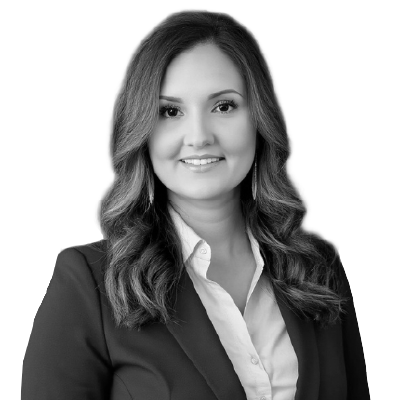
Leah Roderick
Guest
About the Podcast
Share
Authors
By: Chrissy Edginton
Chrissy is the Social Media & Content Marketing Specialist at Canopy.
Read more by ChrissyDiscover more like this