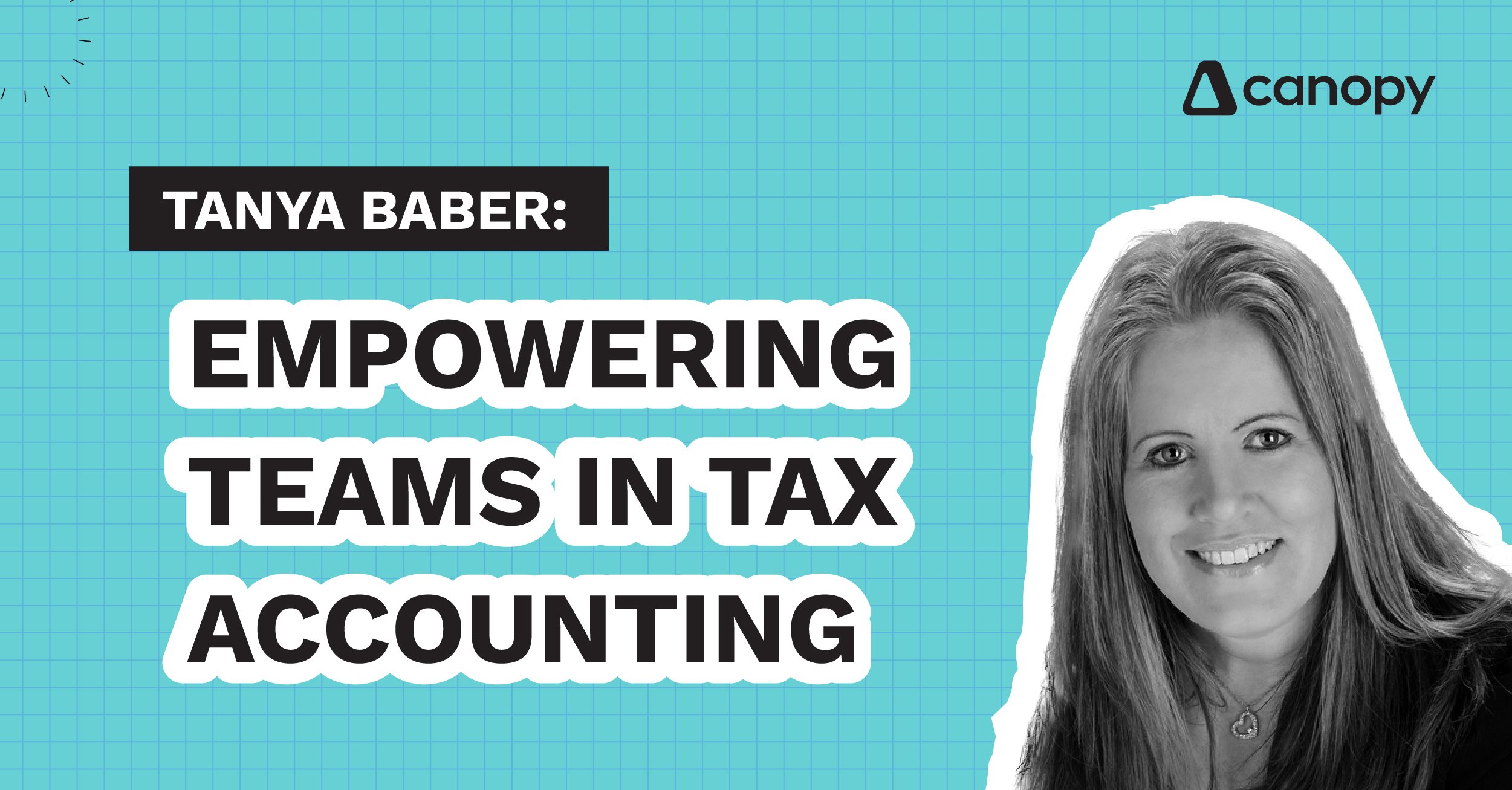
Tanya Baber: Empowering Teams in Tax Accounting



Transcript
(00:00) Canopy Host
Welcome to another episode of Canopy Practice Success—whoa, goodness, I haven’t said that in a while.
Welcome to another episode of Canopy Practice Success. I’m your host, Canopy Host, and I’m here with our tax expert, Tanya Baber.
We work with you a lot, Tanya, but you do more than just work with Canopy. Tell us—what do you do?
(00:22) Tanya Baber
It’s true—and it’s always been a pleasure working with Canopy.
I have a passion for helping accountants, which is a really fun part of what I do. But I’m also your traditional accountant—accounting, tax, payroll, all the core services. That’s been my work for a few decades now.
(00:46) Canopy Host
And you have some really cool hobbies too.
(00:49) Tanya Baber
Yeah—quite a few, honestly.
(00:51) Canopy Host
They’re so fun and unique. I don’t know anyone else who does what you do—and now I’ve totally teased the audience.
(01:00) Tanya Baber
I think accountants get a reputation for being boring, but I look at life like: how much can we fit into the time we have?
A few years ago, I realized I’d lived in Colorado my whole life and never been on the slopes. So I randomly decided to learn snowboarding—midway through life.
(01:28) Canopy Host
I’m not skiing—so how’s your bum?
(01:36) Tanya Baber
It took a few years of falling, but I got there.
I tried skiing first, but two things on my feet didn’t work. One board? That I could manage.
(02:22) Canopy Host
Let’s talk about your firm. You’ve built something unique—and people don’t usually pair “unique” with taxes.
(02:22) Tanya Baber
I’ve always been driven by, “What’s next?”
I started as a solo practitioner, then added staff and grew. At one point, I considered growing through acquisition, but honestly, we don’t need to—clients come to us.
Interestingly, I didn’t start with an accounting degree. I built my firm while earning my degree and learning tax along the way.
I was so concerned about giving bad advice that I became an Enrolled Agent early on—and I overcompensated on education. I was doing 100–200 hours of continuing education a year.
(04:41) Tanya Baber
But eventually, I hit a wall.
I was working 80-hour weeks, and that’s not what I wanted. From the beginning, I believed in 40-hour workweeks—but I wasn’t living it myself.
(04:41) Canopy Host
Thank you for saying that.
I’ve seen people working 60–100 hour weeks during tax season, and I always wonder—how productive can that really be?
(05:39) Tanya Baber
Exactly.
About five or six years ago, I asked myself:
“If I don’t like where I am, how do I get somewhere better?”
The answer was delegation.
I realized I didn’t need to do every step. I created a structured process and started training my team to handle each stage.
Now, my role is primarily review and guidance.
(07:32) Tanya Baber
We built a system where every stage of tax prep is handled by the team.
I mentored a tax manager and pushed him to grow—even when he didn’t think he could.
Now, my entire team is highly capable—even entry-level staff understand tax at a deeper level than most firms.
(07:52) Canopy Host
That builds trust and ownership.
When you give people responsibility, they rise to it—and it frees you up too.
(08:45) Tanya Baber
Exactly—and it also means giving permission to fail.
That’s how people learn in tax. You can’t just read it—you have to experience it.
(09:42) Canopy Host
So what does your life look like now during tax season?
(09:54) Tanya Baber
It’s actually fun.
I only handle the most complex returns now—the ones I enjoy. Everything else runs through the team.
I don’t work weekends anymore. I can even take time off during tax season.
(10:52) Canopy Host
So you’re saying you can run a tax firm and not work yourself to death January through April?
(11:02) Tanya Baber
Absolutely.
We allow flexibility—even during tax season. If someone needs a day off, they can take it.
That balance makes the team more productive.
(11:42) Canopy Host
And it improves the client experience too.
(12:12) Tanya Baber
Exactly.
If you’re exhausted, clients feel that. If you’re energized, they get a better experience.
(13:08) Canopy Host
Talk to us about your workflow. How do you make this possible?
(13:08) Tanya Baber
We built a structured, repeatable process—about 10 steps:
- Client intake
- Data collection
- Missing information follow-ups
- Preparation
- Review
- Finalization
Every return follows the same system.
Anyone on the team can pick it up at any stage.
(15:06) Tanya Baber
We also use a distributed team across multiple states and time zones, which helps balance workload.
(15:06) Canopy Host
Where do you see the future of tax services going?
(15:44) Tanya Baber
Every firm is different, but tax isn’t going away.
As tax gets more complex, clients get more anxious. That creates more demand for trusted advisors.
Even with AI, clients still want reassurance.
(17:08) Tanya Baber
The key is adaptability.
Firms need to:
- Evaluate what works
- Adjust processes
- Evolve constantly
(17:44) Canopy Host
I love that—those postmortems are critical.
(18:43) Tanya Baber
And include your team in that process.
They see things leadership doesn’t. Their insights are invaluable.
(19:44) Canopy Host
That’s a great point—evaluate both client experience and internal workflows.
(21:07) Tanya Baber
Everything changed when I shifted my mindset.
I stopped trying to do everything myself and focused on empowering my team.
(22:03) Canopy Host
What triggered that mindset shift?
(22:03) Tanya Baber
Honestly—I was exhausted.
That forced me to experiment.
Instead of answering every question, I started saying:
“Go find the answer, then we’ll review it together.”
That built confidence and independence in my team.
(23:57) Canopy Host
How did you become such a strong tax expert?
(24:05) Tanya Baber
You never stop learning.
But more importantly—you don’t need to know everything.
You need to know how to find the answer.
(25:05) Canopy Host
What about AI?
(25:05) Tanya Baber
AI is helpful—but it’s not a critical thinker.
It can give general answers, but it misses nuance—especially exceptions.
That’s where human expertise still matters.
(26:34) Tanya Baber
The key is using all available tools:
- Learn what you can
- Look things up
- Collaborate with others
You don’t have to figure everything out alone.
Hosts & Guests
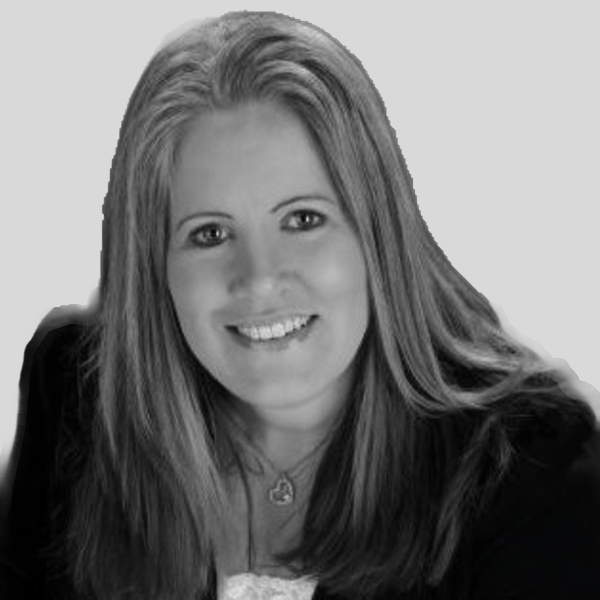
Tanya Baber
Guest
About the Podcast
Share
Discover more like this