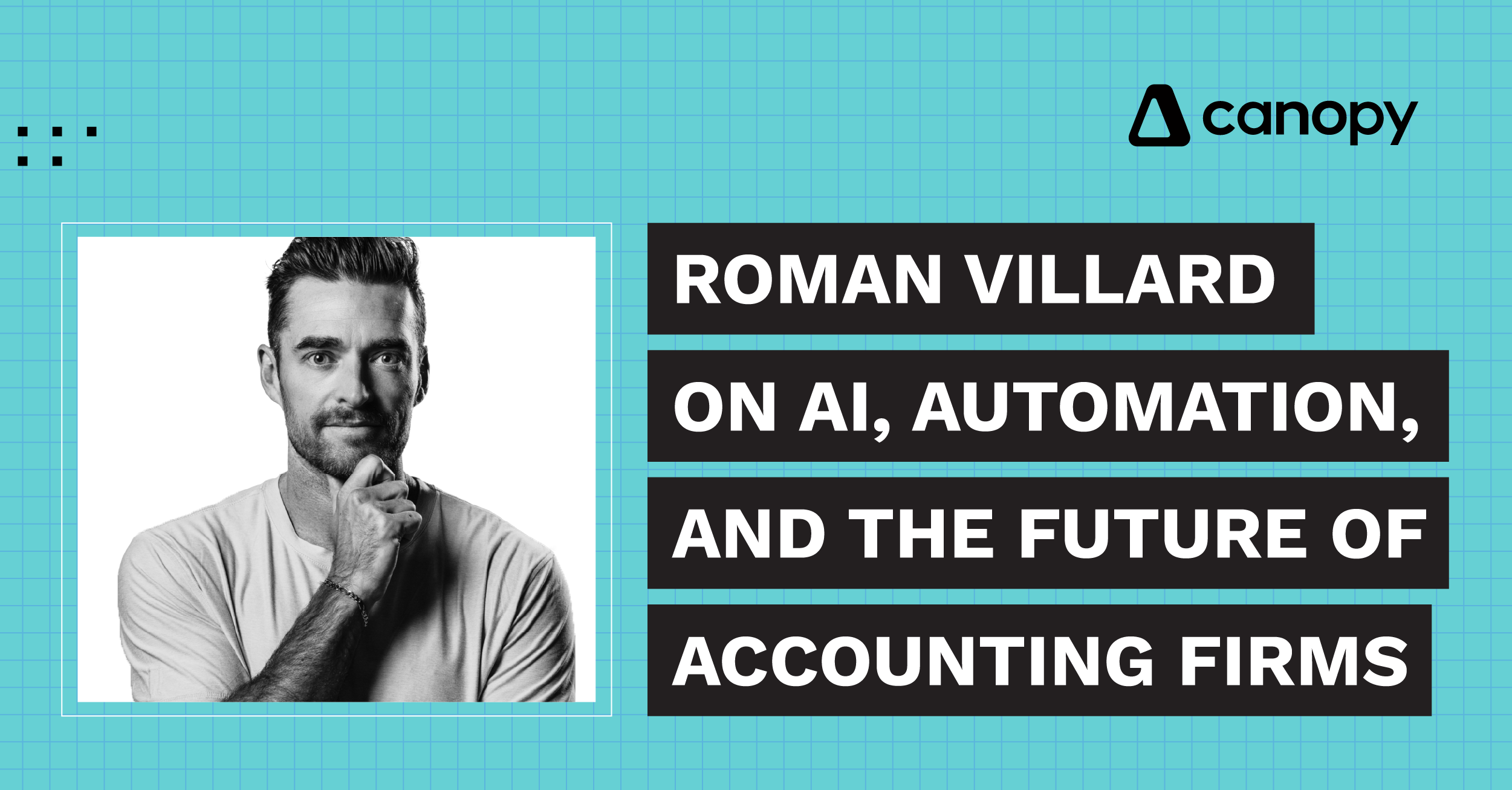
Roman Villard on AI, Automation, and the Future of Accounting Firms



TRANSCRIPT:
Canopy Host (00:00)
Welcome to another episode of Canopy Practice Success. I’m your host, KC Brothers, and today I’m joined by Roman Villard.
Roman is a CPA turned entrepreneur and the force behind a firm called Full Send. His firm helps startups and scaling businesses get smarter about their financial operations, data, and reporting. We’ll get into more of that because the firm used to be called Full Send Finance, and there’s an interesting story behind that transition.
Roman is passionate about breaking down traditional accounting barriers, building in public, and using technology and analytics to shift accounting from a back-office function into something far more strategic.
Welcome, Roman. It’s great to have you here.
Roman Villard (00:42)
That was quite the introduction. There are a lot of different topics we could dive into, but I’m excited to be here.
Canopy Host (00:47)
I’m glad to have you. You bring a unique perspective that we haven’t really had on the podcast before.
Let’s start with your firm. I’d love for you to explain why you changed the name and what led to the transition from Full Send Finance to just Full Send.
Roman Villard (01:04)
Absolutely.
When I started the firm in 2022, we were heavily focused on outsourced accounting and financial insights. The goal was to provide high-quality, tech-enabled accounting services. Most of our work centered around the normal financial rhythms of a business—monthly closes, reporting, and financial insights.
As we worked with clients, though, we started to run into broader operational challenges. Clients struggled with things like aggregating data across multiple systems and reporting on metrics that combined financial and operational information.
As we dug deeper, we realized we needed to sharpen how we defined our value. We were leaning much more into operations and data than traditional accounting.
So earlier in 2025, we decided to remove “Finance” from our name and rebrand simply as Full Send.
Today we operate more like an accounting and operations consultancy. We still do accounting work, but we’re much more focused on data infrastructure, operational workflows, and strategic insights.
Canopy Host (02:28)
That’s interesting. As you’re talking, I’m actually scrolling through your website. Earlier, before we started recording, we were talking about go-to-market strategy and sales—things I get to work on every day and absolutely love.
But looking at your services, I see some pretty non-traditional offerings. For example, you offer services around AI and automation.
What does that look like in practice?
Roman Villard (02:51)
Let me rewind a bit to explain how we got there.
When we transitioned from Full Send Finance to Full Send, we initially leaned heavily into data services. That included data architecture, data governance, and data strategy.
We brought in data scientists who had experience working with Fortune 500 companies, and we wanted to bring that level of data infrastructure to small and mid-sized businesses.
But we learned something quickly.
Small and mid-sized businesses say they care about data infrastructure, but they often don’t feel enough pain to invest heavily in things like building a data warehouse.
For context, most of our clients are growth-oriented companies doing between $1 million and $10 million in revenue. They thought the data infrastructure work sounded great, but it wasn’t always something they were ready to pay for.
What we realized is that data is really the foundation for automation and AI. Once we started focusing on the outcomes—automation, AI workflows, and autonomous agents—the value became much clearer.
Today, our data team spends a lot of time building autonomous agents or systems of agents that can perform tasks and workflows within our clients’ businesses.
Canopy Host (04:17)
There’s a lot to unpack there.
How did you start identifying those opportunities with your clients?
Roman Villard (04:40)
From the beginning, we approached our work through an advisory mindset.
I’ve always believed advisory isn’t something you sell as a standalone service. It’s something that happens naturally over the course of a relationship. You’re either acting as an advisor or you’re not.
So when we onboard new clients, we immediately dig into their operations. We ask questions like:
How do you invoice customers?
What does your bill pay process look like?
How does your quote-to-cash workflow operate?
Understanding those operational processes gives us context so we can provide meaningful advice.
For example, sometimes we’ll discover a broken quote-to-cash process. That creates an opportunity not only to move data between systems more effectively, but also to automate parts of that workflow.
Canopy Host (05:37)
Did you already have people on your team who knew how to do all of this AI work?
Roman Villard (05:49)
Yes and no.
Most people who are considered AI experts today have really only developed their expertise within the last few years. Everyone is still learning.
If someone already has a strong background in machine learning, algorithms, or programming, they’re already well ahead of most people in the AI space.
For us, we intentionally hired people with strong data backgrounds—data strategists and data scientists—and then we invested heavily in learning and experimenting internally.
Over time, we began identifying ways to apply those skills to client services.
Canopy Host (06:56)
That’s interesting because I recently interviewed Dan Hood, the editor-in-chief of Accounting Today. I asked him what took the longest to be adopted in the accounting industry.
His answer was the cloud.
He said it took 10 to 15 years for firms to adopt cloud technology widely. That honestly blew my mind.
Roman Villard (07:35)
I remember that transition.
I think AI adoption will happen much faster because people can see immediate value.
That said, I’ll say something a bit blunt: AI will likely make smart people smarter and less thoughtful users more dependent.
Some people will use AI to enhance their thinking, while others will outsource their thinking entirely. Critical thinking is still incredibly important when developing AI capabilities.
Canopy Host (08:28)
I’ve been saying something similar. There are two things AI can’t replace: critical thinking and relationship building.
Roman Villard (09:14)
Exactly.
The next few years are going to be fascinating for the accounting profession. Firms are trying to figure out how to hedge against rapid changes while continuing to deliver meaningful value.
Canopy Host (09:51)
One thing I’m curious about is how this impacts entry-level talent.
Traditionally, junior staff learn by doing the repetitive work first. If AI starts doing that work, how do new accountants learn the fundamentals?
Roman Villard (10:31)
That’s a great question.
Entry-level roles will definitely change.
When I started as a junior auditor, most of my job involved collecting client data, putting it into spreadsheets, and running sample tests.
Today, AI can perform many of those tasks.
New accountants will still need foundational knowledge, but their role will shift toward managing automated systems rather than performing manual tasks.
Ideally, education programs will adapt so graduates enter the workforce closer to a “manager” mindset rather than a purely technical role.
Canopy Host (11:41)
That probably means accounting education itself needs to evolve.
Roman Villard (11:44)
Absolutely.
Canopy Host (12:31)
Let’s shift to another topic that accountants don’t talk about enough: go-to-market strategy.
You’ve had some interesting experience in this area.
Roman Villard (15:01)
When I left public accounting in 2017, I was working at Crowe, which was a top ten firm at the time.
I applied for a management consulting role, but the firm asked if I’d considered business development.
At the time, I had zero experience in sales.
They offered me a role with a zero-dollar base salary. It was entirely activity-based and commission-based.
Canopy Host (15:56)
Wait… commissions only?
Roman Villard (16:00)
Yes.
At that point in my life, it was just my wife, my dog, and me. I talked to my wife about it, and she encouraged me to take the risk.
Ironically, the first thing I did was hire a sales coach. So I actually started the job in the red.
But it turned out to be one of the best decisions I’ve ever made. It completely changed how I understood sales, partnerships, and go-to-market strategy.
Canopy Host (17:15)
How big is Full Send today?
Roman Villard (17:18)
We have 17 people on the team.
Canopy Host (17:21)
Do you still do accounting work yourself?
Roman Villard (17:26)
No.
About a year and a half after starting the firm, I intentionally stepped away from day-to-day accounting work.
I hired strong managers and directors and brought on a partner I trust. Today I focus almost entirely on go-to-market strategy, sales, partnerships, and marketing.
Canopy Host (19:08)
If someone hears about your firm and thinks, “This sounds very unconventional,” what would you say to them?
Roman Villard (19:46)
I draw a lot of inspiration from the startup world.
Entrepreneurs often create something new by borrowing ideas from other industries.
Our goal is to identify the biggest value drivers for our clients and lean into those opportunities.
And honestly, I often remind myself that there are no rigid rules about how to run your firm. You can design your business however you want.
Canopy Host (29:47)
Before we wrap up, let’s do a few rapid-fire questions.
What’s next for you and Full Send?
Roman Villard (30:07)
We’re leaning heavily into AI services over the next 12 months, particularly building autonomous agents for financial and operational workflows.
Canopy Host (30:30)
What’s one thing you’re most excited about right now?
Roman Villard (30:38)
Personally, continuing to pursue fitness goals. Investing in physical health has had a huge positive impact on my mental clarity and professional performance.
Canopy Host (31:00)
For someone listening who wants to start their own firm, what’s your best advice?
Roman Villard (31:06)
Just send it.
But be prepared for the commitment. Building a firm takes work, sacrifice, and persistence.
That said, the worst-case scenario is that you try, learn something, and go back to a traditional job. I think it’s always worth the attempt.
Canopy Host (32:52)
Roman, thank you so much for joining the show. This was a really insightful conversation
Hosts & Guests
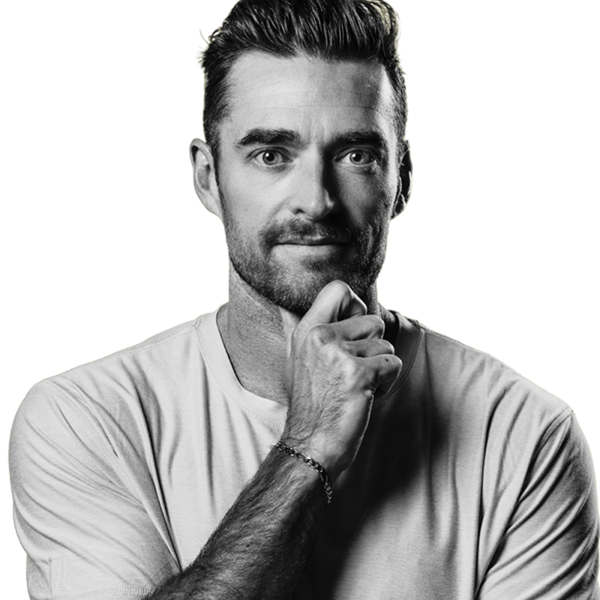
Roman Villard
Guest
About the Podcast
Share
Authors
By: Chrissy Rutledge
Chrissy is the Social Media & Content Marketing Specialist at Canopy.
Read more by ChrissyDiscover more like this