
The Challenge Every Firm Is Facing
As my team and I speak with accounting firms across the country, one challenge rises above all the rest: a shortage of staff and too much work to go around.
Firms can’t find enough qualified people. The ones they do have are stretched thin, often overwhelmed by the sheer volume of tasks. Owners feel stuck between client demands, staff burnout, and the constant fear of falling behind.
The problem feels like it requires a headcount solution — more people to spread out the workload. But here’s the truth: in many firms, the shortage isn’t just about staffing. It’s about friction.
Friction Is the Hidden Capacity Killer
Jeff Bezos once said, “When you reduce friction, people do more of it.” The same principle applies inside your firm.
Friction is anything that slows down work, drains energy, or makes simple tasks harder than they need to be. It’s the small inefficiencies that don’t seem catastrophic in isolation — but when multiplied across hundreds of clients and thousands of tasks, they become the silent thief of capacity.
Examples we see every week:
- Clients dropping off paper documents because no one trained them on your portal.
- Staff re-keying data between disconnected systems.
- A proposal built manually in Word because there’s no standardized template.
- Team members are unclear about who owns a task, leading to missed handoffs.
Every one of these frictions steals minutes or hours. Multiply that across a tax season or a year of client engagements, and you’ve lost the equivalent of an entire staff member — without realizing it.
Why Friction Feels Like a Staffing Crisis
When firms say, “We’re understaffed,” what they often mean is, “We can’t get the work done with the people we have.” That’s capacity. And capacity is often eroded by friction more than by true lack of headcount.
Reducing friction is, of course, about gaining efficiency — eliminating wasted steps and reclaiming time. But it’s also about something even more important: reducing frustration. From what we hear every day, frustration is one of the leading reasons people leave firms.
Here’s how it snowballs:
- It starts with a bad process or no process at all.
- That gap creates extra steps, rework, and delays — slowly eating away at capacity.
- As capacity tightens, people feel too busy, rushed, and reactive.
- Over time, that constant state of “too much work, not enough clarity” burns people out.
- And eventually, the leader of the firm gets so bogged down in the day-to-day that they can’t see the forest for the trees.
This is the cycle I hear from firm owners on a daily basis. And it’s not just a staffing issue — it’s a friction issue.
Removing Friction Is the Best Staffing Strategy
You can’t control how many CPAs enter the job market. You can’t control how competitive hiring has become. But you can control friction.
Every time you eliminate an unnecessary step, standardize a process, or consolidate a tool, you reclaim capacity. That reclaimed capacity can be worth as much as — or more than — a new hire.
Think of it this way:
- One clear, enforced system for document collection can save hundreds of staff hours.
- Automating e-signatures and billing can eliminate dozens of back-and-forth emails.
- A well-structured client onboarding workflow prevents hours of rework down the line.
Removing friction isn’t just operational fine-tuning. It’s your best recruiting, retention, and growth strategy — because it frees your existing team to do more meaningful work without burning out.
Practical Ways to Remove Friction
So how do you get started? Here are four proven strategies:
- Conduct Regular “Friction Audits.”
Each quarter, sit down with your team and ask: What’s slowing us down? What’s confusing our clients? What’s draining our energy? Capture the patterns and prioritize fixes.
- Standardize Processes Firm-Wide.
Document how you onboard clients, collect documents, and deliver work. Stop letting every team member reinvent the wheel. Consistency eliminates confusion and errors.
- Consolidate Your Tech Stack.
Too many firms rely on a patchwork of apps that don’t talk to each other. Instead, think in terms of a Firm Operating System — a unified environment where client tasks, documents, communication, and billing all flow together.
- Train Clients to Reduce Friction.
Don’t assume clients will naturally adopt your preferred systems. Teach them how. Set expectations early. Enforce standards. When clients know exactly how to engage with you, your team gains hours back every week.
Why Many Firms Stay Stuck
One of the biggest reasons friction persists is that many firms are still operating the way they did 10 or even 20 years ago — when technology itself created more friction than it solved.
Instead of rethinking their processes as tools have advanced, many firms have simply layered new tech onto old habits. Take bookkeeping, for example. We still see departments keying
invoices, cutting paper checks, and manually coding transactions, even though tools like QuickBooks Online have evolved into powerful, automation-rich platforms.
The same is true in practice management, tax workflow, and payroll. Modern solutions have removed much of the friction that once made these services so time-consuming. But too many firms haven’t adapted their processes to take advantage of what’s possible.
This failure to rethink — to continually refine and redesign — is why friction lingers. And it’s why so many firms still feel stuck in the same cycle of “too much work, not enough people.”
The Cultural Payoff of a Friction-Free Firm
Removing friction isn’t just about efficiency. It’s also about creating an environment where people want to stay.
In a friction-heavy firm:
- Staff are chasing missing documents, fixing errors, and compensating for broken systems.
- Clients are confused, frustrated, and often slow to respond.
- Owners feel like they’re always one step away from chaos.
In a friction-free firm:
- Workflows are clear and predictable.
- Staff spend more time solving problems and less time navigating them.
- Clients experience ease and clarity, which builds trust and loyalty.
And most importantly: your team feels less overwhelmed. In a time when recruiting is hard and retention is even harder, that cultural advantage can be the difference between a stable firm and a revolving door.
Why This Matters Now
The staffing shortage may not disappear anytime soon. But waiting for the labor market to shift isn’t a strategy.
The firms that thrive in this environment won’t be the ones that somehow find twice as many people to hire. They’ll be the ones who create twice as much capacity by relentlessly removing friction.
Removing friction gives you breathing room. It allows your current team to deliver more with less stress. It improves the client experience without requiring more hours. And it builds a foundation where growth is possible — even when talent is scarce.
Final Thought: Your Hidden Growth Strategy
If you’re feeling the crunch of too much work and too few people, the answer may not be to hire more. The answer may be to do less of what doesn’t matter.
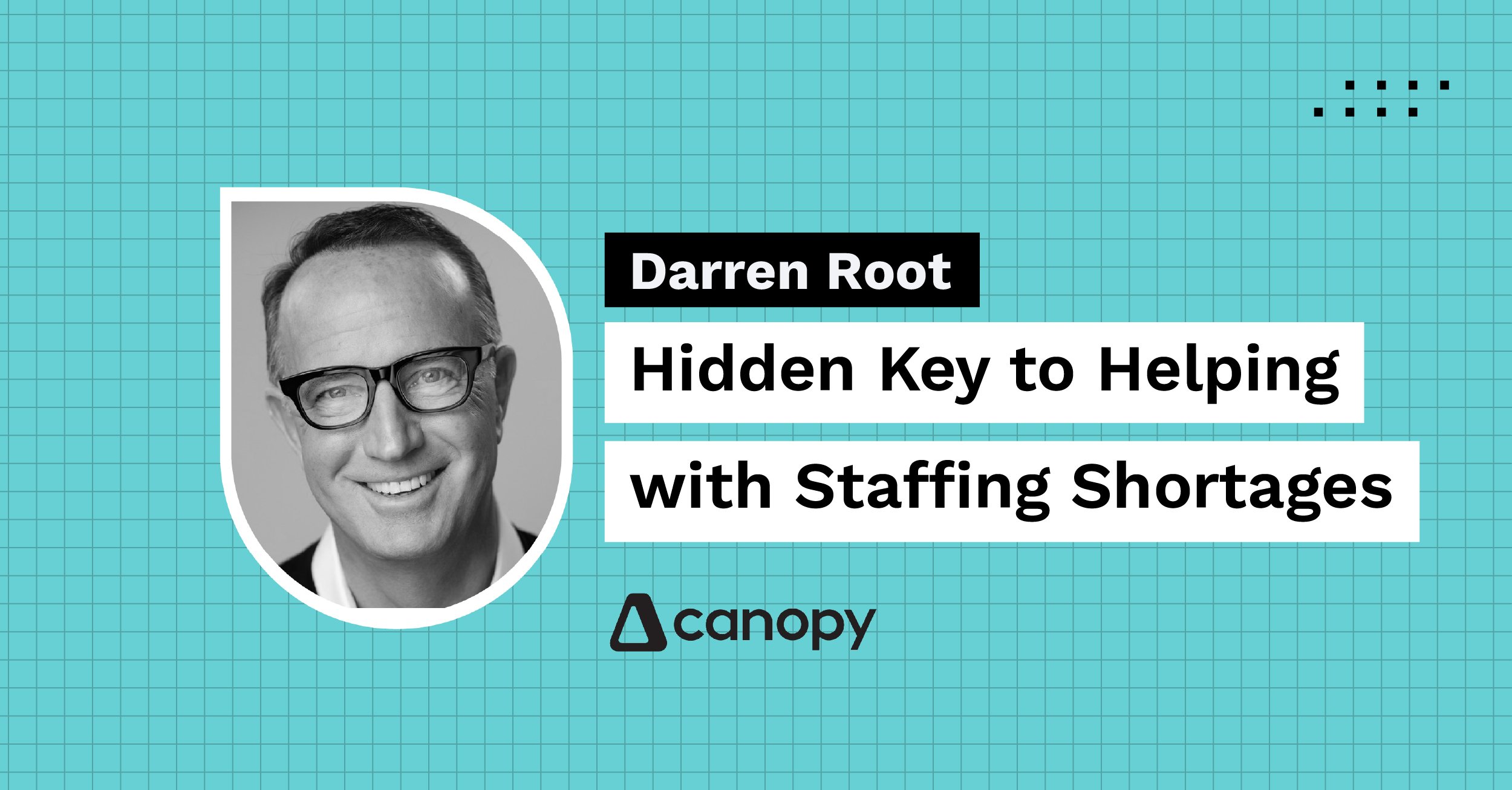
Removing friction is a hidden key to helping with staffing shortages in accounting firms. It’s the way you reclaim capacity, reduce burnout, and make your firm a place where people want to stay.
Because when work flows smoothly, clients are happier, staff are healthier, and your firm is stronger.